Recycling & Waste Industry Today
Textile (Fabric Waste) Recycling Plant DPR & Unit Setup – 2026: Machinery Cost, Process Flow & ROI
Textile recycling is emerging as a critical industry driven by growing fashion waste concerns, environmental sustainability goals, and circular economy principles. With strong demand from apparel, automotive, furniture, construction, and insulation sectors, textile recycling offers attractive opportunities for entrepreneurs and investors seeking sustainable business models.
Understanding the textile recycling plant setup cost is essential for entrepreneurs and investors looking to capitalize on this environmentally conscious and economically viable industrial sector. This comprehensive guide covers every investment aspect from fabric collection to processed fiber production, helping you make informed decisions about entering the textile recycling business.
What is Textile Recycling and Market Opportunity
Textile recycling involves the systematic process of recovering, sorting, and reprocessing used or waste textiles into raw materials for reuse in various applications. Modern textile recycling encompasses diverse sources from post-consumer garments and pre-consumer manufacturing waste to industrial textiles, home furnishings, and carpets. The industry combines environmental responsibility with economic value creation, diverting millions of tons of textile waste from landfills annually.
Primary Applications and Sources:
- Post-consumer clothing and apparel waste
- Pre-consumer textile manufacturing scraps
- Industrial textiles and technical fabrics
- Home furnishings and upholstery materials
- Carpets and floor coverings
- Automotive interior textiles
- Cotton and wool fiber waste
- Synthetic fiber materials (polyester, nylon)
- Mixed fiber blends and composites
- Denim and heavy fabric waste
- Fashion industry excess inventory
- Hotel and hospital linen waste
With fast fashion driving unprecedented textile waste generation, increasing environmental awareness, global emphasis on circular economy, and government incentives for recycling initiatives, textile recycling demand continues its strong upward trajectory across both developed and emerging markets worldwide.
Request for a Sample Report: https://www.imarcgroup.com/textile-recycling-plant-project-report/requestsample
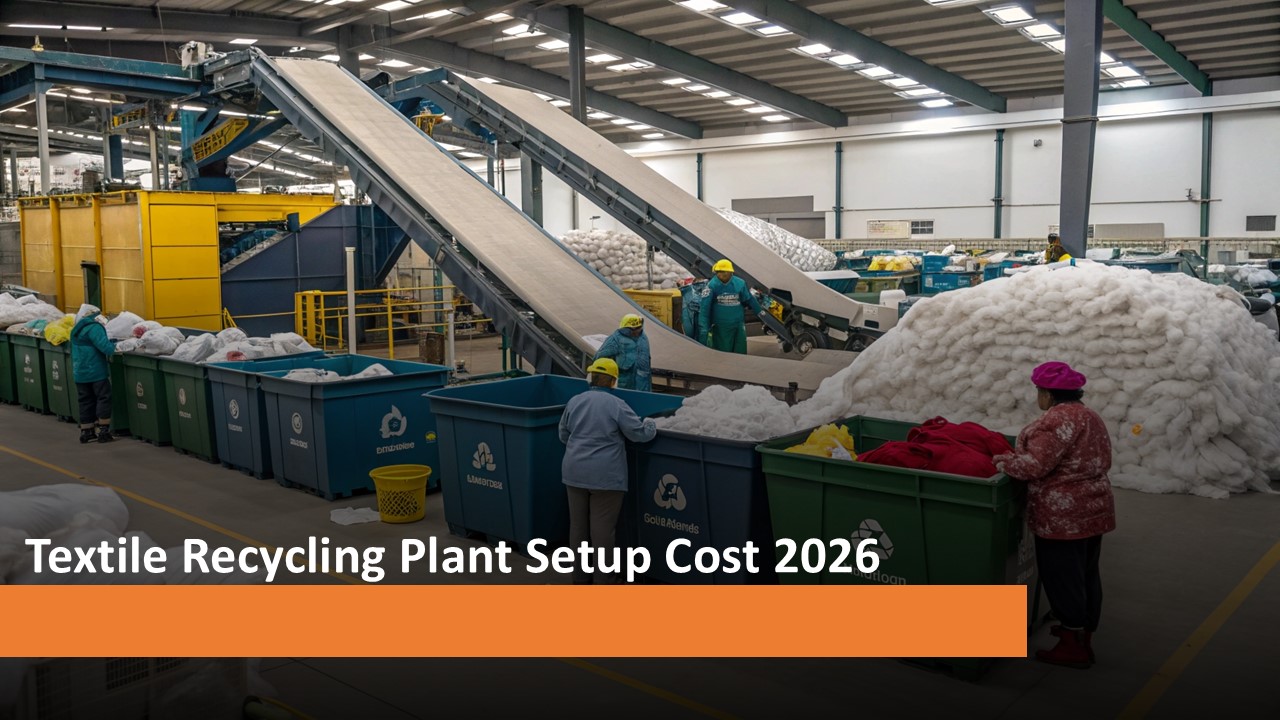
Complete Breakdown of Textile Recycling Plant Setup Costs
1. Land Acquisition and Infrastructure Development
Strategic location balancing collection and distribution is critical for operations:
- Land purchase or long-term lease in industrial zones with adequate space
- Site preparation, leveling, and foundation work for processing equipment
- Boundary development with secure fencing for material protection
- Internal roads capable of handling truck traffic and material movement
- Large receiving and dispatch areas for textile waste and finished products
- Utility infrastructure connections including three-phase power and water
- Weighbridge installation for accurate material measurement
- Employee facilities, parking, and administrative areas
- Environmental compliance infrastructure including drainage systems
- Security systems with surveillance for material inventory protection
Location Strategy: Proximity to textile waste collection networks, access to apparel and automotive industries, connectivity to transportation infrastructure, and availability of skilled labor ensures optimal collection and distribution economics while minimizing logistics costs.
2. Textile Collection and Storage Infrastructure
Diverse material handling and inventory management systems required:
- Large, covered warehouses for different textile categories
- Segregated storage areas for natural fibers, synthetic fibers, and mixed materials
- Climate-controlled storage for moisture-sensitive textiles
- Contamination prevention systems for clean material storage
- Material handling equipment including forklifts and conveyors
- Container systems for organized textile categorization
- Quality inspection and incoming material verification area
- Secure storage for processed fiber products
- Fire suppression systems specifically designed for textile materials
- Inventory management and tracking systems
3. Processing Equipment and Machinery
Core production technology represents the major capital investment component:
Primary Processing Equipment:
- Textile sorting conveyors and inspection tables
- Automatic fiber identification systems (NIR technology)
- Cutting and shredding equipment for size reduction
- Color sorting machines for material categorization
- Contaminant removal systems (buttons, zippers, labels)
- Opening and tearing machines for fiber liberation
- Carding machines for fiber alignment and cleaning
- Baling presses for compacting sorted textiles
Advanced Recycling Systems:
- Mechanical shredding and garnetting equipment
- Chemical recycling reactors for polymer depolymerization
- Fiber separation systems for blended fabrics
- Washing and cleaning equipment for contaminated textiles
- Drying systems for processed materials
- Pelletizing machines for synthetic fiber recycling
- Re-spinning equipment for yarn production
- Quality grading and classification systems
Material Preparation:
- De-buttoning and accessory removal equipment
- Fabric cutting and sizing machinery
- Label and tag removal systems
- Metal detector and removal equipment
- Dust extraction and collection systems
- Material conveying infrastructure
Quality Analysis Equipment:
- Fiber composition analyzers
- Strength and durability testing equipment
- Color fastness testing apparatus
- Contamination detection instruments
- Laboratory setup for quality control
Buy now: https://www.imarcgroup.com/checkout?id=39127&method=2142
4. Environmental Control Systems
Compliance infrastructure essential for regulatory approval and sustainable operations:
- Dust collection and filtration systems throughout the facility
- Air pollution control equipment meeting emission standards
- Wastewater treatment plant for washing and processing operations
- Effluent treatment and monitoring systems
- Solid waste management for non-recyclable materials
- Noise control measures and acoustic barriers
- Microfiber capture systems for synthetic textile processing
- Chemical handling and storage infrastructure (if using chemical recycling)
- Environmental monitoring and reporting systems
5. Utilities and Energy Systems
Essential supporting infrastructure for continuous operation requirements:
- High-capacity three-phase electrical power supply with adequate load capacity
- Dedicated transformer station for heavy machinery requirements
- Backup generators for critical operations during power interruptions
- Compressed air generation and distribution network
- Industrial water supply, storage tanks, and circulation systems
- Steam generation systems for cleaning and processing operations
- Hot water systems for washing equipment
- Fire detection, alarm, and suppression systems throughout facility
- Emergency lighting and safety evacuation systems
6. Civil Works and Buildings
Physical infrastructure requirements encompassing entire facility:
- Main processing hall with adequate space for sorting operations
- Textile receiving and grading area with weather protection
- Mechanical processing section with proper ventilation
- Chemical processing area (if applicable) with safety compliance
- Cleaned fiber storage and packaging area
- Finished product warehouse with organized storage systems
- Maintenance workshop and spare parts storage room
- Quality control laboratory and testing facility
- Administrative offices and control room
- Employee facilities including changing rooms and cafeteria
- Security office and gate control infrastructure
- Hazardous material storage building (for chemical recycling)
- Truck loading and unloading bays
7. Material Handling and Logistics
Efficient movement infrastructure throughout operations:
- Conveyor belt systems for automated material flow
- Forklifts and material handling vehicles
- Overhead cranes for heavy bale movement
- Weighbridges for accurate measurement and record-keeping
- Loading and unloading equipment
- Transportation vehicles for textile collection if required
- Bale handling and stacking systems
- Automated guided vehicles (AGVs) for large operations
8. Instrumentation and Control Systems
Manufacturing management and monitoring infrastructure for operational excellence:
- Enterprise Resource Planning (ERP) system for business management
- Inventory management with digital tracking and reporting
- Production planning and scheduling software
- Supplier and procurement management systems
- Customer relationship management (CRM) platform
- Weighbridge software integrated with accounting
- Real-time production monitoring displays
- Safety and compliance tracking systems
- Financial accounting and reporting software
- Traceability systems for material origin tracking
9. Engineering and Pre-operative Costs
Project development and regulatory compliance expenses before operations commence:
- Comprehensive feasibility study and market analysis
- Environmental impact assessment and clearances
- Detailed engineering, plant layout, and design development
- Pollution control board approvals and licenses
- Industrial licenses and regulatory authorizations
- Technology selection and equipment procurement process
- Installation, commissioning, and trial runs
- Staff recruitment, training, and skill development programs
- Initial textile material procurement and inventory buildup
- Marketing collateral and business development initiatives
- Supplier and customer network establishment
- Certification programs (recycled content standards, sustainability certifications)
10. Working Capital Requirements
Initial operational funds for smooth business continuity:
- Textile waste procurement (significant working capital requirement)
- Utilities, consumables, and operational supplies
- Employee salaries, wages, and contractor payments
- Marketing and business development expenses
- Transportation and logistics costs for collection and delivery
- Customer credit periods for processed fiber sales
- Equipment maintenance and spare parts inventory
- Administrative and overhead expenses
- Contingency reserves for market fluctuations
- Regulatory compliance and periodic certification costs
Key Factors Determining Total Investment
Production Capacity Scale
- Small-Scale Operations: Suitable for local textile processing with capacity of 500-1,500 tons annually. Manual sorting emphasis, basic mechanical processing, serving local market needs, minimal automation.
- Medium-Scale Facilities: Designed for regional operations processing 3,000-8,000 tons annually. Balanced automation with mechanized sorting, moderate processing capacity, good economies of scale for competitive positioning.
- Large-Scale Plants: Built for national markets with capacity exceeding 15,000 tons annually. High automation, continuous processing lines, advanced recycling capabilities including chemical recycling, optimal cost efficiency, and strong market presence.
Processing Technology Selection
Your technology choice fundamentally impacts investment requirements and operational efficiency:
- Mechanical Processing Only: Focus on sorting, shredding, and fiber separation without chemical treatment. Lower investment, quicker returns, dependence on downstream processors, suitable for natural fiber recycling.
- Integrated Chemical Recycling: Complete processing including polymer depolymerization for synthetic fibers. Higher investment, better margins for synthetic materials, independent operations, suitable for polyester and nylon recycling.
- Specialized Processing: Focus on specific materials like denim, wool, or technical textiles. Specialized equipment investment, premium pricing potential, niche market positioning, technical expertise requirements.
Environmental Compliance Level
Regulatory requirements significantly impact capital expenditure:
- Basic Compliance: Meeting minimum regulatory standards with standard pollution control equipment and monitoring systems.
- Advanced Environmental Systems: Zero-discharge facilities, advanced dust control, exceeding regulatory requirements, enhancing brand reputation and market access to eco-conscious brands.
- Green Certification: Pursuing environmental certifications like ISO 14001, GRS (Global Recycled Standard), or GOTS (Global Organic Textile Standard), requiring comprehensive systems, documentation, and continuous improvement programs.
Textile Sourcing Strategy
Your collection approach influences working capital and infrastructure investment:
- Aggregator Model: Purchasing from textile waste dealers and collectors, lower collection infrastructure, higher material costs, focus on processing efficiency.
- Direct Collection: Building own collection network from fashion brands, manufacturers, and municipalities, higher infrastructure investment, better material costs, volume control, relationship building.
- Brand Partnerships: Processing textile waste for fashion brands on contract basis, lower working capital, stable volumes, processing margins, less market risk, circular economy positioning.
Product Output Strategy
Final product form determines equipment and market positioning:
- Wiping Rags and Industrial Cloths: Basic sorting and cutting, quick turnaround, lower margins, bulk material handling.
- Recycled Fiber and Fill Material: Mechanical shredding and processing, moderate value addition, serving insulation and automotive industries.
- Regenerated Yarn and Fabric: Maximum value addition through re-spinning, specialized equipment, serving apparel manufacturers, premium market positioning.
- Chemical Recycling Feedstock: Producing virgin-quality polymer raw materials, highest technology investment, premium pricing, serving brand sustainability commitments.
Understanding Return on Investment
Revenue Streams
Primary Income Sources:
- Sale of recycled fibers to textile manufacturers and converters
- Processing fees for brand take-back programs
- Sale of wiping rags and industrial cleaning cloths
- Insulation material sales to construction industry
- Automotive interior component materials
- Premium pricing for certified recycled content materials
- Export opportunities to international textile markets
- Long-term supply contracts with sustainable fashion brands
Cost Structure
Major Operating Expenses:
- Textile waste procurement representing 60-75% of operational cost
- Electricity charges for processing operations (10-15%)
- Labor costs for sorting, operations, and quality control (8-12%)
- Consumables including chemicals (if chemical recycling), packaging materials (3-5%)
- Equipment maintenance and spare parts replacement
- Environmental compliance and treatment costs
- Transportation and logistics expenses
- Administrative overheads and certification costs
Profitability Drivers
Success depends on optimizing several critical operational factors:
- Efficient textile waste procurement at competitive pricing
- Maintaining high recovery rates minimizing material losses
- Achieving optimal capacity utilization throughout operations
- Producing high-quality recycled fibers commanding premium prices
- Managing fashion industry cycles and seasonal variations
- Minimizing energy consumption through efficient operations
- Maximizing recovery of all fiber types and materials
- Building reliable supplier and brand partnerships
- Maintaining strict quality standards and certifications ensuring market acceptance
- Adapting to evolving sustainable fashion requirement
Government Incentives and Policy Support
Various programs can significantly reduce effective investment requirements:
- Financial Support: MSME subsidies for recycling industry promotion, capital investment grants under environmental programs, interest subsidies on project loans.
- Tax Benefits: Reduced GST rates on recycling operations, income tax exemptions for recycling units, accelerated depreciation on pollution control equipment.
- Environmental Incentives: Extended Producer Responsibility (EPR) creating assured textile supply from fashion brands, preferential procurement from certified recyclers, support for textile waste processing infrastructure.
- Circular Economy Programs: Government support for circular fashion initiatives, funding for innovative recycling technologies, grants for research and development.
- Export Promotion: Export incentives for recycled textile materials, participation support in international trade events, simplified export procedures for recycled products.
Ask Analyst for Customization: https://www.imarcgroup.com/request?type=report&id=39127&flag=C
Critical Success Factors
- Secure Reliable Textile Supply: Success begins with consistent material availability. Build strong networks with fashion brands and manufacturers, establish direct relationships with municipalities and waste management companies, create collection infrastructure in strategic locations, participate in brand take-back programs, and maintain transparent dealings building long-term partnerships.
- Maintain Quality Standards: Producing high-quality recycled fibers commands premium pricing and brand loyalty. Invest in quality testing infrastructure, implement strict incoming material inspection, maintain process controls during recycling, obtain certifications like GRS and RCS (Recycled Claim Standard), and ensure consistent fiber specifications.
- Optimize Processing Efficiency: Operational excellence drives profitability in competitive markets. Minimize processing losses through technology and training, maximize recovery rates for all fiber types, reduce energy consumption per ton processed, maintain equipment properly preventing downtime, and continuously improve processes based on data analysis.
- Navigate Fashion Industry Cycles: Textile recycling is influenced by fashion trends and seasonal patterns. Monitor fashion industry developments closely, maintain flexible sourcing approaches, build working capital buffers for seasonal variations, develop diverse customer base across industries, and stay informed about sustainable fashion trends.
- Ensure Environmental Compliance: Regulatory adherence protects operations and enables partnerships with leading brands. Invest adequately in pollution control systems, maintain rigorous monitoring and reporting, stay updated with evolving regulations, build positive relationships with environmental authorities, and view compliance as competitive advantage for brand partnerships.
- Develop Brand Relationships: Strong partnerships with fashion brands and manufacturers ensure business stability. Build relationships with sustainable fashion leaders, offer consistent quality and reliable supply, provide value-added services like traceability and certification, maintain professional communication and documentation, and develop reputation for integrity and environmental commitment
Risk Management Strategies
- Fashion Market Volatility: Fast fashion trends and economic cycles affect textile waste generation and demand. Mitigate through diversified customer base across apparel, automotive, and construction sectors, maintaining flexible processing capabilities, building financial reserves during favorable periods, and developing long-term contracts with stable partners.
- Textile Supply Disruptions: Dependence on fashion brands and waste collectors creates operational vulnerability. Address through multiple sourcing channels, geographic diversification of collection, maintaining strategic inventory buffers, building strong partnerships with incentives, and considering vertical integration into collection infrastructure.
- Environmental Compliance Failures: Non-compliance can result in shutdowns and loss of brand partnerships. Prevent through proactive investment in pollution control, regular monitoring and audits, staff training on environmental procedures, maintaining comprehensive documentation, and engaging environmental consultants for guidance.
- Quality Variation Issues: Inconsistent fiber quality affects brand satisfaction and pricing. Control through rigorous incoming material inspection, standardized processing protocols, regular quality checks during production, proper equipment calibration, and immediate corrective action for deviations.
- Technology Obsolescence: Rapid advancement in recycling technologies can make existing equipment outdated. Manage through continuous technology monitoring, modular equipment investments allowing upgrades, maintaining relationships with technology providers, allocating budget for periodic modernization, and participating in industry research initiatives.
- Working Capital Constraints: High working capital requirements for textile inventory strain financial resources. Manage through efficient inventory turnover, negotiating favorable payment terms with brands, securing adequate credit facilities, maintaining conservative leverage ratios, and reinvesting profits for growth.
Conclusion
The textile recycling plant setup cost represents moderate to substantial capital investment depending on capacity, technology, and environmental infrastructure, but the growing sustainable fashion movement offers compelling returns for well-executed projects. With rising awareness of textile waste, increasing fashion brand sustainability commitments, supportive government policies through EPR regulations, growing circular economy adoption, and strong demand for recycled content materials, textile recycling presents an attractive business opportunity for entrepreneurs with operational expertise, market understanding, and environmental commitment. Success requires securing reliable textile waste supply networks, maintaining strict quality standards and certifications, achieving processing efficiency, navigating fashion industry dynamics, and ensuring environmental compliance. With thorough feasibility analysis, appropriate technology selection, operational excellence, and strong brand partnerships, your textile recycling venture can deliver both environmental benefits and robust financial performance in this essential circular economy sector.
About IMARC Group
IMARC Group is a global management consulting firm that helps the world's most ambitious changemakers to create a lasting impact. The company excels in understanding its clients' business priorities and delivering tailored solutions that drive meaningful outcomes. We provide a comprehensive suite of market entry and expansion services. Our offerings include thorough market assessment, feasibility studies, company incorporation assistance, factory setup support, regulatory approvals and licensing navigation, branding, marketing and sales strategies, competitive landscape and benchmarking analyses, pricing and cost research, and procurement research.
Contact Us:
IMARC Group
134 N 4th St. Brooklyn, NY 11249, USA
Email: sales@imarcgroup.com
Tel No: (D) +91 120 433 0800
United States: +1-201-971-6302
Share on Social Media


Contact Information
IMARC Group
134 N 4th St.
Brooklyn
New York
11249
+1-201-971-6302
https://www.imarcgroup.com
Other Industry News
Ready to start publishing
Sign Up today!