Market Research Industry Today
Europe Temperature Sensor Market : Industry Growth, Trends, and Future Outlook to 2030
The Europe Temperature Sensor Market plays a vital role in modern industrial and consumer technologies. Temperature sensors are critical components used to measure thermal changes in various systems, ensuring operational safety, efficiency, and reliability across multiple industries. These sensors are widely used in automotive systems, industrial automation, consumer electronics, healthcare devices, and energy infrastructure.
The Europe temperature sensor market is projected to grow from USD 1.21 billion in 2025 to USD 1.42 billion by 2030, at a CAGR of 3.3%
The increasing need for accurate thermal monitoring, advancements in sensor technologies, and the growing adoption of connected devices are major factors driving the expansion of the market. Additionally, regulatory standards related to safety, energy efficiency, and environmental compliance are accelerating the deployment of advanced temperature sensing solutions across Europe.
Download PDF Brochure: https://www.marketsandmarkets.com/pdfdownloadNew.asp?id=194767647
Market Overview
Temperature sensors are devices designed to detect and measure temperature changes in various environments and convert those readings into electrical signals for monitoring or control systems. These sensors are essential in applications where maintaining precise temperature control is critical.
The Europe Temperature Sensor Market benefits from the region’s strong industrial base, which includes automotive manufacturing, aerospace production, energy infrastructure, and advanced healthcare systems. The presence of leading electronics manufacturers and research institutions further supports innovation and technological development in sensor technologies.
With the rapid adoption of Internet of Things (IoT) devices, smart home technologies, and electric vehicles, temperature sensors are becoming more integrated into modern electronic systems. Sensors now feature higher accuracy, faster response times, and improved digital connectivity, enabling real-time temperature monitoring in complex systems.
Top Key Takeaways
- The Europe Temperature Sensor Market is projected to reach USD 1.42 billion by 2030.
- The market is expected to grow at a CAGR of 3.3% from 2025 to 2030.
- Contact temperature sensors account for over 86% of the market share.
- Wireless temperature sensors are expected to grow rapidly due to IoT adoption.
- Digital output sensors are becoming increasingly popular for modern applications.
- Consumer electronics represent one of the fastest-growing end-use industries.
- Germany holds the largest share of the European temperature sensor market.
- Automotive and electric vehicle applications are major demand drivers.
- Industrial automation and smart manufacturing are expanding sensor adoption.
- Major companies such as Texas Instruments and Honeywell dominate the competitive landscape.
Key Drivers of the Europe Temperature Sensor Market
1. Rising Demand in Automotive and Electric Vehicles
One of the most significant drivers of the Europe Temperature Sensor Market is the rapid growth of the automotive industry, particularly the transition toward electric vehicles (EVs).
Temperature sensors are used extensively in automotive applications such as:
- Battery thermal management systems
- Engine temperature monitoring
- Cabin climate control
- Exhaust system temperature detection
Electric vehicles require advanced thermal management systems to maintain battery efficiency and safety. As EV adoption grows across Europe, the demand for high-precision temperature sensors continues to increase.
2. Growth of Industrial Automation and Smart Manufacturing
The rise of Industry 4.0 technologies is significantly influencing the demand for sensors across European manufacturing facilities. Industrial automation systems rely heavily on temperature sensors to monitor machinery performance and prevent overheating.
Temperature sensors are commonly used in:
- Process control systems
- Robotics and automation equipment
- Industrial machinery monitoring
- Predictive maintenance systems
Real-time temperature monitoring enables manufacturers to improve operational efficiency, reduce downtime, and ensure product quality.
3. Expansion of Consumer Electronics and IoT Devices
The increasing popularity of smart devices is also contributing to the expansion of the Europe Temperature Sensor Market. Consumer electronics such as smartphones, laptops, wearables, and smart home appliances require integrated temperature sensors to maintain safe operating temperatures.
The consumer electronics segment is expected to grow significantly as more devices incorporate thermal monitoring features for improved performance and energy efficiency.
Smart refrigerators, thermostats, and HVAC systems also use advanced sensors to regulate indoor climate and optimize energy consumption.
4. Increasing Adoption in Healthcare and Medical Devices
Healthcare technology is another key sector driving the demand for temperature sensors in Europe. Medical devices often require precise temperature monitoring to ensure accurate diagnostics and patient safety.
Common healthcare applications include:
- Patient monitoring systems
- Medical imaging equipment
- Laboratory testing devices
- Pharmaceutical storage and transport
The expansion of healthcare infrastructure and the growing demand for continuous monitoring devices are supporting the integration of advanced temperature sensing technologies.
5. Regulatory Focus on Energy Efficiency and Safety
European regulatory standards emphasize energy efficiency, workplace safety, and environmental compliance. Temperature sensors help industries meet these regulations by providing accurate monitoring of equipment and environmental conditions.
For example, sensors are used in HVAC systems to optimize building energy consumption and reduce carbon emissions. The region’s increasing focus on sustainable infrastructure and energy management is expected to further boost the demand for temperature sensing technologies.
Market Segmentation
The Europe Temperature Sensor Market can be categorized based on several factors including sensor type, connectivity, output type, and end-use industries.
By Product Type
Temperature sensors are broadly classified into contact and non-contact sensors.
Contact Sensors
Contact sensors include:
- Thermocouples
- Thermistors
- Resistive Temperature Detectors (RTDs)
This segment accounted for over 86% of the market share in 2024, primarily due to their affordability, reliability, and wide temperature measurement range.
Contact sensors are widely used in industrial processes, automotive systems, and chemical plants.
Non-Contact Sensors
Non-contact sensors measure temperature without direct physical contact with the object. Examples include:
- Infrared temperature sensors
- Fiber optic temperature sensors
These sensors are particularly useful in applications involving extreme temperatures or hazardous environments.
By Connectivity
Temperature sensors can operate using different connectivity technologies:
- Wired sensors
- Wireless sensors
Wireless sensors are expected to experience the fastest growth due to the rising adoption of IoT devices and smart monitoring systems. These sensors enable remote monitoring and seamless integration with digital platforms.
By Output Type
Temperature sensors typically provide either analog or digital output signals.
Digital sensors are gaining popularity due to their accuracy, improved data transmission capabilities, and compatibility with modern electronic systems. The digital segment is projected to grow at the highest rate during the forecast period.
By End-Use Industry
Temperature sensors serve a wide range of industries including:
- Automotive
- Aerospace and defense
- Consumer electronics
- Energy and power
- Healthcare
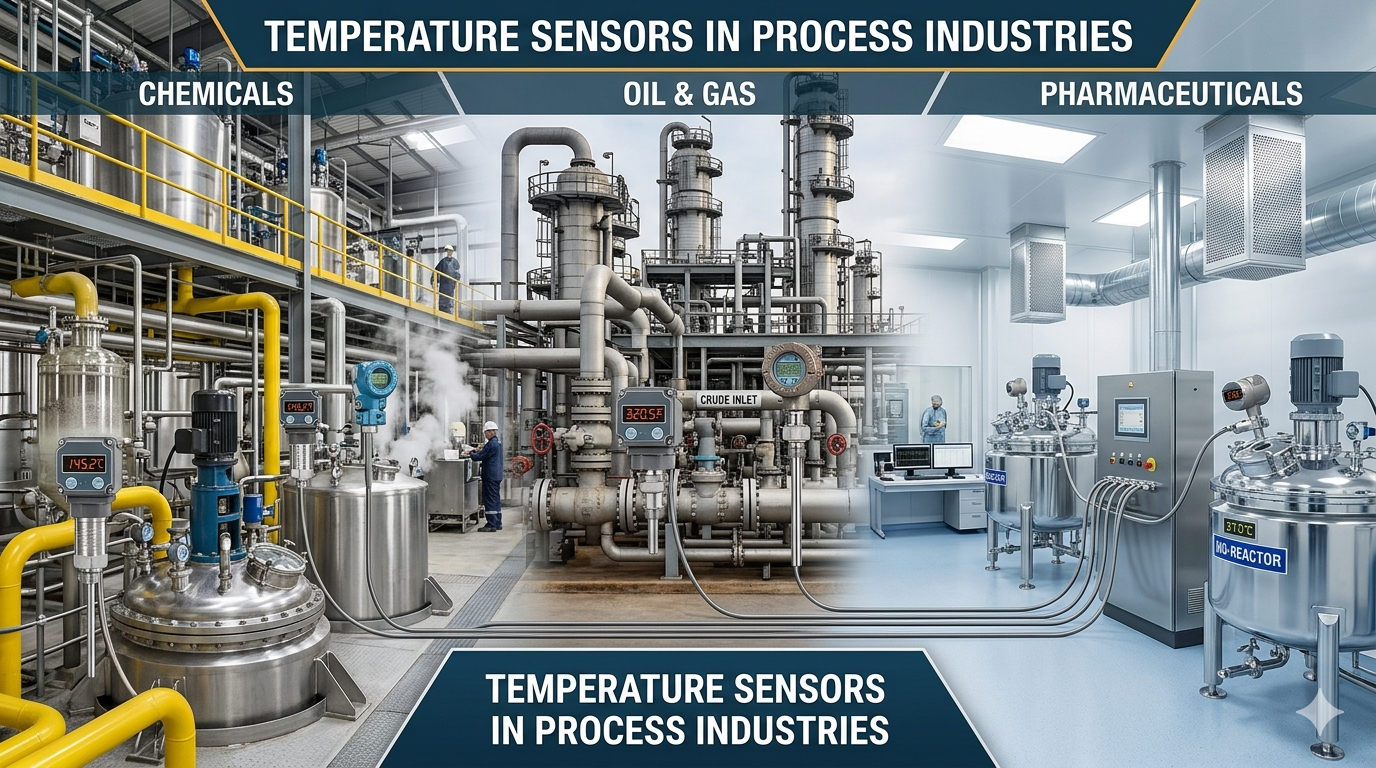
- Chemicals and oil & gas
The consumer electronics sector is expected to hold a notable market share, driven by the increasing use of sensors in smartphones, laptops, and smart appliances.
Regional Insights
Europe is considered one of the most technologically advanced markets for sensors due to its strong industrial infrastructure and research capabilities.
Germany
Germany is the largest market for temperature sensors in Europe, accounting for around 30.4% of the regional market share in 2025.
The country’s strong automotive industry, advanced manufacturing sector, and emphasis on industrial automation contribute to its dominant position in the market.
United Kingdom
The UK is another key market, with increasing adoption of temperature sensors in healthcare, energy, and smart home technologies.
France and Italy
France and Italy are also significant contributors to the regional market due to their aerospace, industrial manufacturing, and consumer electronics industries.
Overall, Europe represents a major hub for sensor innovation, supported by strong research and development initiatives.
Competitive Landscape
The Europe Temperature Sensor Market is highly competitive, with several global electronics companies offering advanced sensor solutions.
Key market players include:
- Texas Instruments
- Honeywell International
- TE Connectivity
- Siemens
- Emerson Electric
- Analog Devices
- Amphenol
- Microchip Technology
- STMicroelectronics
- NXP Semiconductors
These companies focus on technological innovation, product development, and strategic partnerships to strengthen their market presence.
Emerging startups and small-to-medium enterprises are also gaining traction by developing specialized temperature sensing solutions for niche applications.
Inquiry Before Buying : https://www.marketsandmarkets.com/Enquiry_Before_BuyingNew.asp?id=194767647
Future Outlook
The Europe Temperature Sensor Market is expected to grow steadily over the next decade as industries continue adopting digital monitoring systems and smart technologies.
Several trends will shape the future of the market:
- Increased integration of sensors in IoT ecosystems
- Growth of electric vehicles and battery management systems
- Expansion of smart manufacturing and automation
- Advancements in wireless and digital sensor technologies
- Rising demand for energy-efficient building management systems
As digital transformation continues across Europe, temperature sensors will remain essential components in next-generation industrial and consumer technologies.
Frequently Asked Questions (FAQ)
1. What is the projected size of the Europe Temperature Sensor Market?
The market is expected to grow from USD 1.16 billion in 2024 to approximately USD 1.42 billion by 2030.
2. What factors are driving the growth of the market?
Major drivers include the growth of electric vehicles, industrial automation, consumer electronics, and increasing demand for IoT-based monitoring systems.
3. Which country dominates the Europe temperature sensor market?
Germany holds the largest share of the market, accounting for more than 30% of regional demand.
4. What types of temperature sensors are commonly used?
Common types include thermocouples, thermistors, resistive temperature detectors (RTDs), and infrared temperature sensors.
5. Who are the major players in the market?
Key companies include Texas Instruments, Honeywell International, TE Connectivity, Siemens, Emerson Electric, and Analog Devices.
Share on Social Media


Contact Information
SAMIR SHUKLA
MarketsandMarkets™ Research Private Ltd.
Magarpatta Sez, Tower B5-1
Hadapsar
Pune
Maharashtra
411013
9923490533
https://www.marketsandmarkets.com/
Other Industry News
Ready to start publishing
Sign Up today!