Market Research Industry Today
Europe lithium‑ion Battery Market Size, Share, Trends and Industry Analysis Forecast To 2033
The Europe Lithium‑ion Battery Market is experiencing robust expansion as the region accelerates electrification, renewable energy adoption, and industrial transformation. Driven by stringent climate goals, increasing electric vehicle (EV) penetration, and rising demand for energy storage solutions, Europe is emerging as a key battleground for lithium‑ion battery technology, manufacturing, and innovation.
The Europe lithium‑ion battery market is projected to grow from USD 40.23 billion in 2025 and to reach USD 88.26 billion by 2033, at a Compound Annual Growth Rate (CAGR) of 10.3% during the forecast period.
Europe lithium‑ion battery Market Drivers and Growth Factors
Policy Support and Clean Energy Initiatives
Europe’s ambitious decarbonization agenda, including the European Green Deal and alignment with net‑zero emission targets, is a major catalyst for market growth. Regulatory frameworks and investment incentives are prioritizing domestic battery production and supply chain localization to reduce dependency on imported cells and raw materials. These policy initiatives support battery cell manufacturing within Europe and stimulate demand from EV and energy storage segments.
Acceleration in Electric Vehicle Adoption
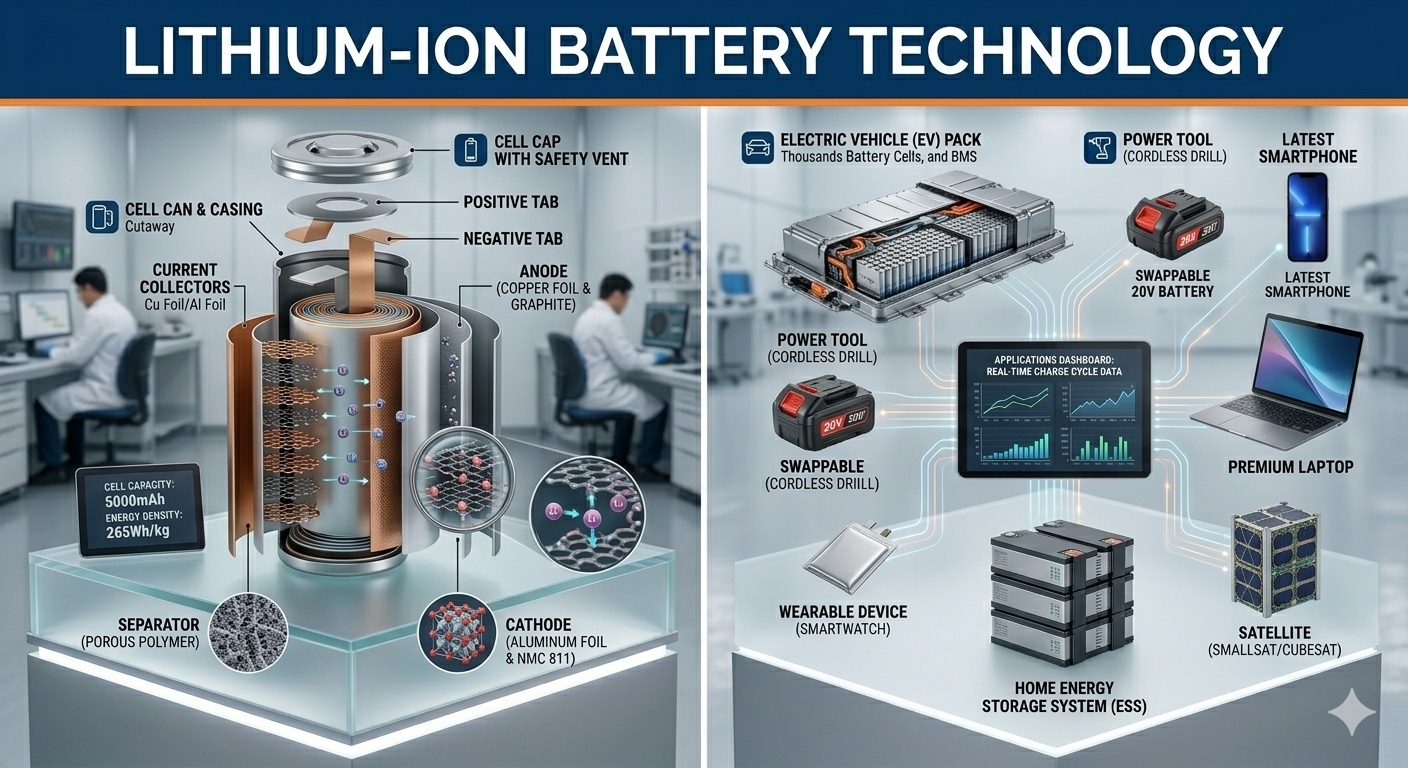
The transition to zero‑emission vehicles is one of the most powerful drivers of Lithium‑ion Battery Market growth in Europe. Governments are incentivizing EV purchases and tightening emission standards, encouraging automotive manufacturers to incorporate advanced lithium‑ion cells. As a result, the EV segment is forecast to hold the largest share of battery demand in the region, boosting both automotive and battery producer investments.
Energy Storage Demand for Renewables
As renewable energy capacity grows across Europe, there is a rising need for energy storage systems (ESS) to manage intermittency and grid stability. Lithium‑ion batteries are the primary choice for utility‑scale and distributed energy storage solutions due to their high efficiency, reliability, and scalability. The expansion of wind and solar power installations, especially in Germany, Spain, and the Nordic region, is directly contributing to market growth.
Download PDF Brochure @ https://www.marketsandmarkets.com/pdfdownloadNew.asp?id=249517566
Top Key Takeaways
- The Europe lithium‑ion battery market is projected to reach USD 88.26 billion by 2033 with a 10.3% CAGR (2025–2033).
- Strong EV adoption is the largest demand driver for lithium‑ion batteries in Europe.
- Renewable energy storage needs are significantly boosting market growth.
- LFP chemistries are emerging as a high‑growth segment.
- Regional gigafactory investments enhance local manufacturing capacity.
- Policy support, such as EU climate initiatives, drives market expansion.
- Germany remains the largest national market within Europe.
- Sustainability and recycling are key strategic focus areas.
- Competition from alternative battery technologies presents future challenges.
- Collaborations between automakers and battery manufacturers are shaping market dynamics.
Key Technological and Market Trends
Expansion of Gigafactories and Localized Manufacturing
Europe is witnessing significant investments in gigafactories dedicated to lithium‑ion battery production. Countries such as Germany, France, Spain, and the UK are strategically positioning themselves as regional manufacturing hubs. This trend supports supply‑chain resilience, job creation, and technological innovation, making Europe a more competitive player in the global battery landscape.
Rapid Adoption of Diverse Battery Chemistries
While traditional lithium nickel manganese cobalt (NMC) chemistries remain prominent due to their high energy density, alternatives such as lithium iron phosphate (LFP) are gaining traction for their enhanced safety and cost advantages. The LFP segment is expected to record strong growth during the forecast period, reflecting shifting industry preferences and automaker strategies.
Growing Focus on Sustainability and Lifecycle Management
Environmental regulations in Europe are placing increased emphasis on battery recycling, sustainable materials sourcing, and circular economy principles. Manufacturers are investing in technologies that improve recyclability and reduce dependence on critical metals, aligning with broader sustainability goals. This trend is shaping product design and influencing regional demand patterns.
Market Segmentation
The Europe lithium‑ion battery market is segmented by various dimensions, including battery type, application, and region:
By Battery Type
- NMC (Nickel Manganese Cobalt)
- LFP (Lithium Iron Phosphate) – fastest growing
- LCO (Lithium Cobalt Oxide)
- LTO (Lithium Titanate Oxide)
- LMO (Lithium Manganese Oxide)
- NCA (Nickel Cobalt Aluminium)
- LFP chemistries in particular are forecast to register significant growth, driven by cost and safety performance benefits in EV applications.
By Key Applications
- Electric Vehicles (EVs) – Dominant demand contributor
- Energy Storage Systems (Utility & Residential)
- Industrial Applications
- Consumer Electronics & Medical Devices
- The EV sector remains the primary growth engine of the lithium‑ion battery market, aligning with Europe’s vehicle electrification trends and emission reduction policies.
Regional Insights
Europe’s lithium‑ion battery landscape varies across countries, reflecting differences in industrial capabilities, policy support, and automotive ecosystems.
- Germany is expected to remain the largest national market due to its strong automotive sector, gigafactory investments, and renewable energy integration efforts.
- The UK is anticipated to record one of the highest CAGRs among European markets, driven by alternative energy storage applications and EV infrastructure growth.
- Other markets such as France, Italy, Spain, and the Nordic region are rapidly expanding due to supportive government strategies and clean energy commitments.
Inquiry Before Buying @ https://www.marketsandmarkets.com/Enquiry_Before_BuyingNew.asp?id=233422030
Competitive Landscape
The Europe Lithium‑ion Battery Market includes a mix of established global players and innovative regional firms. Key participants include Northvolt AB, Saft, and VARTA AG, among others, which combine diversified product portfolios and strong partnerships with OEMs in the automotive and energy sectors.
Emerging startups and SMEs are also playing an important role by advancing next‑generation cell technologies and expanding localized gigafactory capacities, enhancing innovation and competition within the regional market.
Future Europe lithium‑ion battery market Outlook
The Europe lithium‑ion battery market’s strong growth trajectory is underpinned by electrification, renewable integration, and supportive public policies. Continued investment in manufacturing capacity, technological innovation, and sustainability practices is expected to amplify demand across automotive, energy storage, and industrial applications through 2033 and beyond.
As Europe pursues energy independence and decarbonization, lithium‑ion batteries will play an increasingly vital role in enabling clean mobility, flexible energy systems, and smart electrification solutions.
Frequently Asked Questions (FAQs)
1. What is driving the Europe lithium‑ion battery market growth?
Market growth is driven by EV adoption, renewable energy storage demand, and supportive regulatory policies across the region.
2. Which battery chemistries are most popular in Europe?
NMC remains widely used, while LFP is the fastest‑growing segment due to cost and safety benefits.
3. What are the main applications of lithium‑ion batteries in Europe?
Major applications include electric vehicles, energy storage systems, industrial use, and consumer electronics.
4. Which country leads the Europe lithium‑ion battery market?
Germany is the largest market, supported by automotive demand and gigafactory investments.
5. What challenges does the market face?
Key challenges include high production/recycling costs, supply chain constraints, and competition from alternative battery technologies
Share on Social Media


Contact Information
SAMIR SHUKLA
MarketsandMarkets™ Research Private Ltd.
Magarpatta Sez, Tower B5-1
Hadapsar
Pune
Maharashtra
411013
9923490533
https://www.marketsandmarkets.com/
Other Industry News
Ready to start publishing
Sign Up today!