Market Research Industry Today
Europe Automated Material Handling Equipment Market : Growth Opportunities, Key Trends, Industry Report 2030
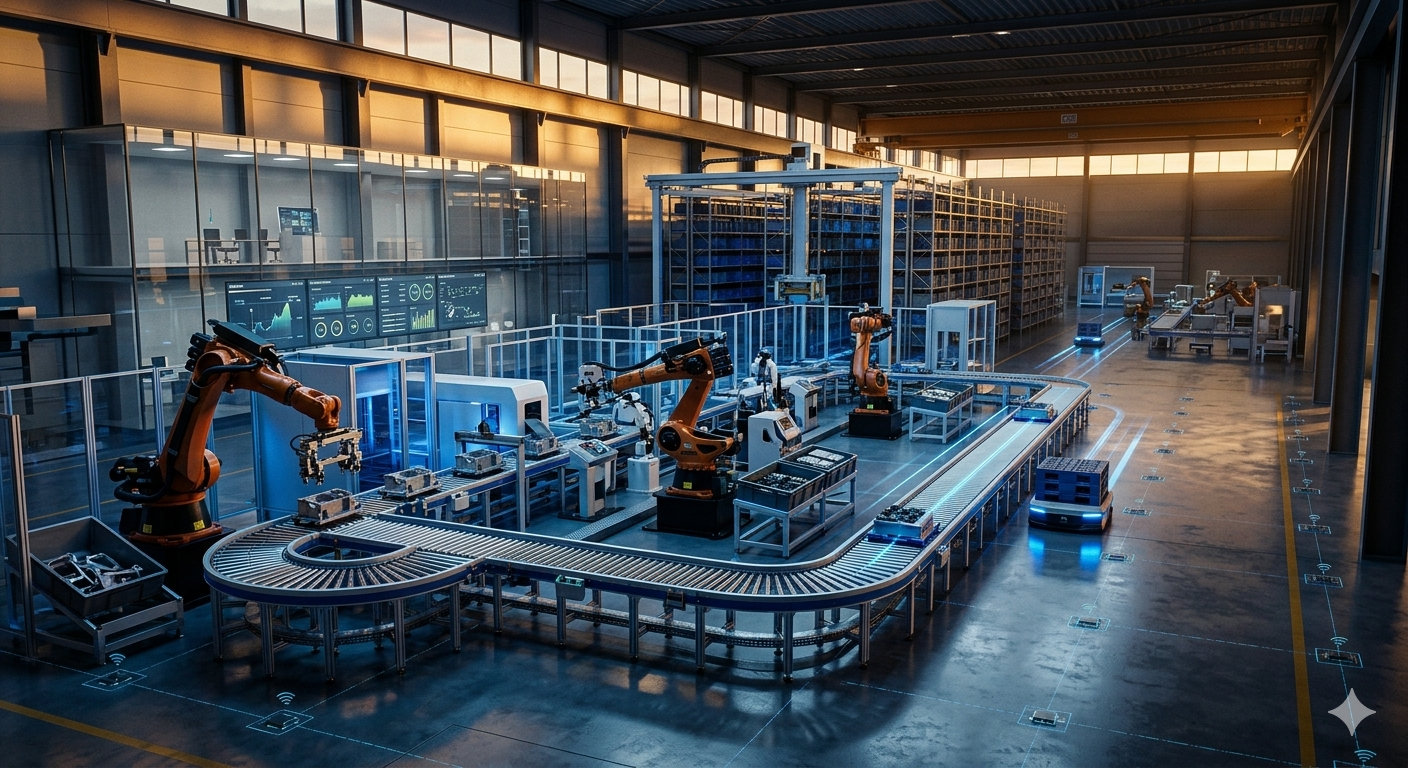
The Europe Automated Material Handling Equipment (AMHE) Market is rapidly evolving as industries across the region accelerate digital transformation and automation within supply chains, warehouses, and manufacturing facilities. Automated material handling systems are designed to transport, store, control, and manage goods using robotics, automated vehicles, conveyors, and intelligent software systems. These technologies significantly improve operational efficiency, reduce labor dependency, and enhance inventory accuracy.
In recent years, the European logistics ecosystem has witnessed strong demand for automation due to the expansion of e-commerce, rising labor costs, and the push toward Industry 4.0. As companies strive to increase productivity and streamline operations, automated solutions such as Autonomous Mobile Robots (AMRs), Automated Guided Vehicles (AGVs), Automated Storage and Retrieval Systems (ASRS), and warehouse management systems (WMS) have become essential components of modern supply chain infrastructure.
According to MarketsandMarkets, Europe is projected to grow from USD 8.94 billion in 2025 to USD 13.04 billion by 2030, registering a CAGR of 7.8%
Download PDF Brochure: https://www.marketsandmarkets.com/pdfdownloadNew.asp?id=210801880
Market Overview
Automated material handling equipment includes systems and technologies that automate the movement, storage, protection, and control of materials throughout manufacturing and distribution processes. These systems help organizations reduce manual intervention while improving safety, operational efficiency, and throughput.
The European market has become one of the most technologically advanced regions for warehouse automation due to strong industrial infrastructure, supportive government policies, and high adoption of advanced robotics. Companies across Germany, France, the Netherlands, and the United Kingdom are investing heavily in automated warehouses to support faster order fulfillment and cross-border logistics.
Growth in the market is largely driven by increasing e-commerce penetration, the need for faster delivery, and the growing complexity of modern supply chains. Businesses are adopting automated equipment to manage higher order volumes while maintaining operational accuracy and efficiency.
Market Size and Forecast
The Europe Automated Material Handling Equipment Market has shown consistent growth over the past decade and is expected to continue expanding as automation technologies mature.
- Market size in 2025: USD 8.94 billion
- Projected market size in 2030: USD 13.04 billion
- CAGR (2025–2030): 7.8%
This growth is attributed to the rising demand for high-throughput warehouses, advanced robotics, and automated logistics systems that support large-scale operations. The need for efficient warehouse operations and real-time inventory management is encouraging companies to invest in automated solutions.
In addition, the expansion of pan-European distribution networks and cross-border trade is increasing the need for automated handling systems capable of managing complex logistics operations efficiently.
Key Market Drivers
1. Rapid Growth of E-commerce
One of the most significant drivers of the European AMHE market is the rapid growth of e-commerce. Online retailers and logistics companies must process millions of orders daily, requiring efficient warehouse operations and automated sorting systems.
Automation technologies such as robotic picking systems, automated conveyors, and intelligent storage solutions help companies handle high order volumes while maintaining accuracy and speed. The demand for next-day or same-day delivery services is further accelerating the adoption of automated material handling equipment.
2. Increasing Labor Shortages
Labor shortages and rising labor costs in Europe are pushing companies toward automation. Many logistics facilities struggle to recruit skilled workers for physically demanding warehouse tasks.
Automated systems help businesses reduce reliance on manual labor while improving workplace safety and operational efficiency. Robots and automated vehicles can perform repetitive tasks such as picking, sorting, and pallet handling with high precision.
3. Adoption of Industry 4.0 Technologies
Industry 4.0 technologies, including Artificial Intelligence (AI), Internet of Things (IoT), machine vision, and predictive analytics, are transforming warehouse operations across Europe.
These technologies enable real-time monitoring, predictive maintenance, and improved inventory visibility, making automated material handling systems more intelligent and efficient. The integration of AI-powered warehouse management systems (WMS) further enhances operational performance and decision-making.
4. Sustainability and Energy Efficiency
European companies are increasingly focusing on sustainable logistics and energy-efficient operations. Automated material handling systems reduce energy consumption and optimize resource utilization.
Electric forklifts, low-emission automated vehicles, and regenerative conveyor systems help companies meet environmental regulations and sustainability goals. Governments across the European Union are also promoting digitalization and automation to reduce carbon emissions and improve supply chain efficiency.
Market Segmentation
By Product
The Europe Automated Material Handling Equipment Market can be segmented into several key product categories:
- Industrial robots
- Autonomous Mobile Robots (AMRs)
- Automated Guided Vehicles (AGVs)
- Automated Storage and Retrieval Systems (ASRS)
- Cranes
- Conveyors and sortation systems
- Warehouse Management Systems (WMS)
Among these segments, warehouse management systems (WMS) are expected to grow at the highest CAGR of around 15.2% due to increasing demand for real-time warehouse visibility and automation.
By System Type
Automated material handling systems are typically classified into:
- Unit load systems
- Bulk load systems
Unit load systems are expected to dominate the European market as they are widely used in logistics warehouses, automotive plants, and retail distribution centers for handling palletized goods and large inventory volumes.
By Industry
Major industries adopting automated material handling equipment include:
- Automotive
- E-commerce and retail
- Food and beverage
- Pharmaceuticals
- Electronics
- Logistics and third-party logistics (3PL)
Among these sectors, the automotive industry is expected to hold the largest market share due to Europe’s strong vehicle manufacturing base and extensive use of automation in production lines.
Regional Insights
Several European countries are leading the adoption of automated material handling technologies.
Germany
Germany is the largest market in the region, accounting for over 34% of the European market share. The country’s strong industrial base, advanced manufacturing infrastructure, and leadership in Industry 4.0 have driven significant adoption of automated logistics systems.
United Kingdom
The UK is witnessing strong growth in warehouse automation due to the expansion of e-commerce fulfillment centers and increasing demand for last-mile delivery solutions.
France and the Netherlands
France and the Netherlands are emerging as key logistics hubs in Europe, with increasing investments in automated distribution centers and supply chain infrastructure.
Competitive Landscape
The Europe Automated Material Handling Equipment Market features a competitive ecosystem consisting of robotics manufacturers, automation solution providers, and warehouse technology companies.
Key Market Players
Major companies operating in the market include:
· SSI SCHAEFER (Germany),
· KUKA (Germany),
· Jungheinrich AG (Germany), and
· KION Group AG (Germany).
These companies provide comprehensive solutions including robotic systems, automated storage systems, conveyor technology, and warehouse software platforms.
Emerging Trends
Growth of Autonomous Mobile Robots
Autonomous mobile robots (AMRs) are becoming increasingly popular in European warehouses due to their flexibility and scalability. These robots can navigate warehouses independently and transport goods between storage locations and picking stations.
Smart Warehouses
Smart warehouses equipped with AI-driven analytics, IoT sensors, and automated robotics are becoming the future of logistics operations in Europe.
Nearshoring Manufacturing
Many European companies are relocating production closer to regional markets to improve supply chain resilience. This shift is increasing demand for automated warehouse systems in Eastern and Central Europe.
Future Outlook
The future of the Europe Automated Material Handling Equipment Market looks promising as automation continues to transform the logistics and manufacturing landscape. As companies seek to improve efficiency, reduce operational costs, and enhance supply chain resilience, automated systems will become increasingly essential.
Technological advancements such as collaborative robots, AI-powered warehouse management systems, and predictive analytics will further accelerate market growth. Additionally, increasing investments in smart factories and sustainable logistics infrastructure will drive adoption across multiple industries.
Inquiry Before Buying @ https://www.marketsandmarkets.com/Enquiry_Before_BuyingNew.asp?id=210801880
Top Key Takeaways
- The Europe Automated Material Handling Equipment Market will reach USD 13.04 billion by 2030.
- The market is projected to grow at a CAGR of 7.8% between 2025 and 2030.
- E-commerce growth is a major driver of warehouse automation in Europe.
- Germany leads the European market with over 34% share.
- Warehouse Management Systems (WMS) are expected to grow at the highest CAGR.
- Automotive manufacturing remains the largest end-user industry.
- Technologies such as AI, IoT, and robotics are transforming warehouse operations.
- Labor shortages are accelerating the adoption of automated handling equipment.
- Sustainable logistics and energy-efficient systems are gaining importance in Europe.
- Key companies such as KION Group, KNAPP, and SSI Schaefer dominate the market ecosystem.
Frequently Asked Questions (FAQs)
1. What is automated material handling equipment?
Automated material handling equipment refers to technologies that automate the movement, storage, control, and protection of materials within warehouses and manufacturing facilities using robotics, conveyors, and automated vehicles.
2. How big is the Europe Automated Material Handling Equipment Market?
The market is expected to grow from USD 8.94 billion in 2025 to USD 13.04 billion by 2030.
3. What are the key drivers of market growth?
Major drivers include e-commerce expansion, labor shortages, Industry 4.0 adoption, and the need for faster logistics operations.
4. Which industry uses automated material handling equipment the most?
The automotive industry is one of the largest users of automated material handling systems in Europe.
5. Which country leads the market in Europe?
Germany leads the market due to its advanced manufacturing sector and strong adoption of Industry 4.0 technologies.
Share on Social Media


Contact Information
SAMIR SHUKLA
MarketsandMarkets™ Research Private Ltd.
Magarpatta Sez, Tower B5-1
Hadapsar
Pune
Maharashtra
411013
9923490533
https://www.marketsandmarkets.com/
Other Industry News
Ready to start publishing
Sign Up today!