

Manufacturing Industry Today
Europe Manufacturing Execution System (MES) Market : Growth Opportunities, Key Trends, Industry Report 2030
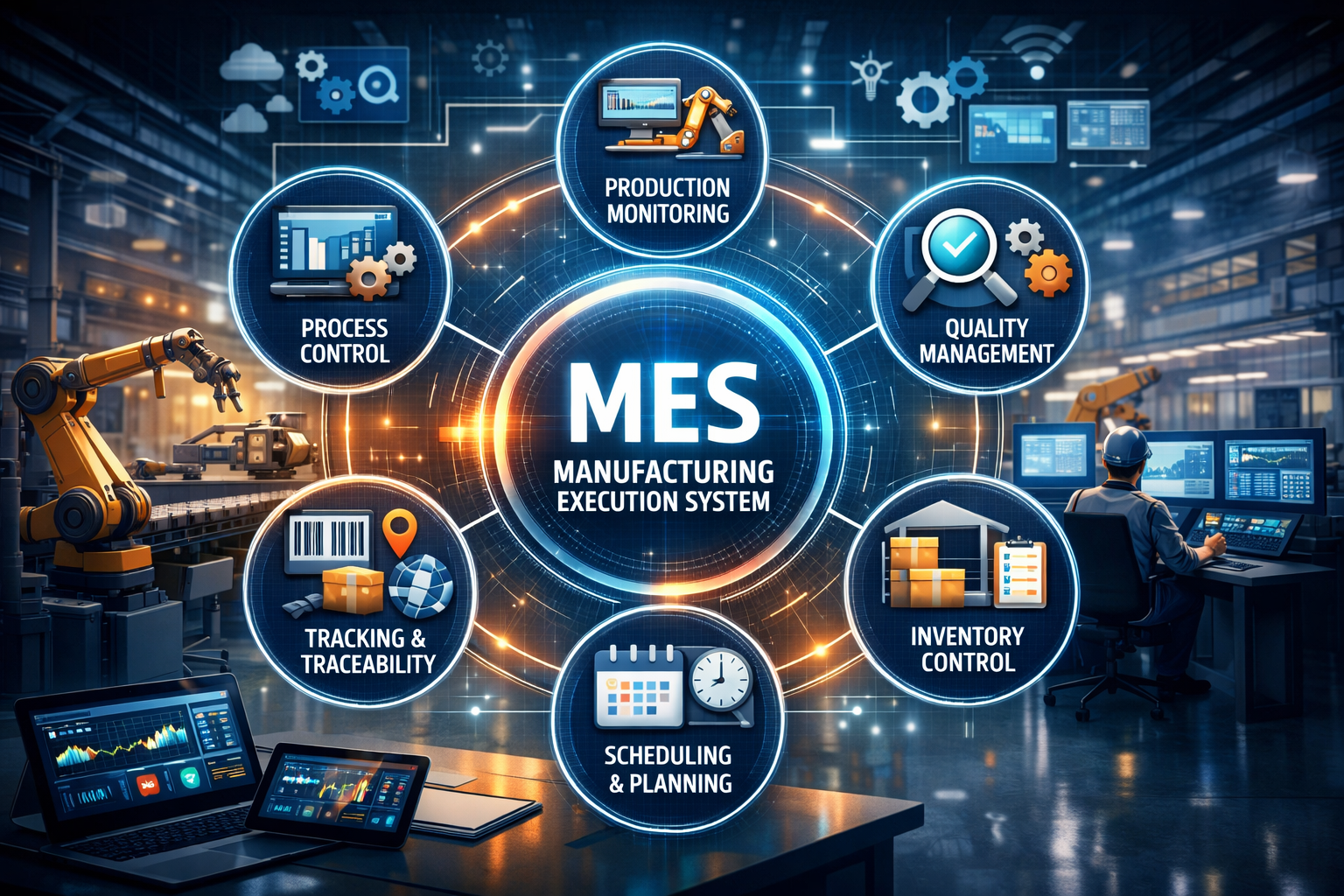
The Europe Manufacturing Execution System (MES) Market is witnessing strong expansion, driven by increasing industry 4.0 adoption, smart manufacturing initiatives, and the need for real‑time production control and traceability. MES platforms help manufacturers bridge the gap between shop floor operations and enterprise systems, offering improved visibility, operational efficiency, and compliance across a wide range of industrial sectors.
According to a MarketsandMarkets™, the Europe Manufacturing Execution System (MES) Market is projected to grow from USD 3.80 billion in 2025 and to reach USD 5.88 billion by 2030, at a Compound Annual Growth Rate (CAGR) of 9.1%
The region’s advanced manufacturing base — especially in Germany, the UK, France, and key Nordic and Southern European countries — continues to adopt MES solutions to enhance production management, quality control, and performance analytics across discrete and process industries.
Download PDF Brochure: https://www.marketsandmarkets.com/pdfdownloadNew.asp?id=258685760
Key Market Drivers
Industry 4.0 and Smart Factory Adoption
The rapid adoption of Industry 4.0 technologies — including IoT, AI‑driven analytics, and automation — is a major growth driver for the European MES market. Manufacturers are increasingly integrating MES platforms to enable real‑time production monitoring, predictive maintenance, and optimized workflows, supporting smart factory transformation. This trend is particularly prominent in automotive, aerospace, and high‑tech manufacturing sectors.
Regulatory Compliance and Quality Standards
Europe’s stringent regulatory framework across sectors such as pharmaceuticals, food & beverage, and medical devices is accelerating MES adoption. MES solutions help manufacturers maintain compliance with EU regulations and quality standards, ensure traceability, and execute electronic batch records (EBR), which are crucial for audit readiness and quality assurance.
Need for Operational Efficiency and Traceability
Manufacturing firms are under increased pressure to reduce downtime, minimize waste, and improve overall equipment effectiveness (OEE). MES platforms provide end‑to‑end visibility of production processes, enabling real‑time decision‑making, continuous improvement, and streamlined operations. Demand for such capabilities is strengthening MES deployment across European plants.
Shift to Digital Processes and Paperless Manufacturing
Digital transformation initiatives are prompting manufacturers to replace traditional paper‑based processes with electronic workflows managed via MES systems. This shift supports higher quality standards, improved documentation control, and faster response to production anomalies.
Top Key Takeaways
- The Europe MES market is projected to grow from USD 3.80 billion in 2025 to USD 5.88 billion by 2030 at a CAGR of 9.1%.
- Industry 4.0 adoption is a primary catalyst for MES deployment across Europe.
- On‑premises MES dominates due to data security and regulatory compliance needs.
- Services segment — including implementation and integration — is growing rapidly.
- Pharmaceuticals & life sciences is the fastest‑growing industry segment.
- Germany leads the regional market, supported by its strong industrial base.
- MES solutions increasingly integrate AI, IoT, and predictive analytics.
- Cybersecurity and IT/OT convergence remain key challenges.
- MES enhances production visibility, traceability, and quality control.
- Demand for cloud and hybrid MES solutions is rising among multi‑site manufacturers.
Market Segmentation
By Offering
The Europe MES market is segmented into software and services. Services — including implementation, integration, consulting, and maintenance — are expected to register high growth due to the complexity of MES deployments and the need for customization and ongoing support.
By Deployment Mode
On‑premises MES deployment currently holds the largest share in the region, primarily due to companies’ preferences for greater control, data security, and integration with existing systems — especially in sectors requiring tight compliance, such as pharmaceuticals and life sciences. Cloud and hybrid deployments are also gaining traction for multi‑site operations due to their scalability and centralized management benefits.
By Application
MES solutions serve a variety of applications such as:
- Production Management
- Quality Management
- Performance Analytics
- Predictive Maintenance
These application modules help manufacturers improve shop floor execution, monitor equipment health, optimize quality processes, and leverage data analytics to drive continuous productivity gains.
By Industry
The Europe MES market spans multiple end‑use industries, including:
- Pharmaceuticals & Life Sciences
- Automotive
- Food & Beverages
- Chemicals
- Aerospace
- Electronics & Semiconductors
- Metals & Mining
- Medical Devices
Among these, pharmaceuticals & life sciences is poised to grow at the fastest rate due to stringent regulatory compliance demands and increasing focus on quality and traceability.
Regional Insights
Germany: Regional Market Leader
Germany is expected to dominate the Europe MES market in terms of size and growth. The country’s robust industrial base — including automotive, machinery, and life sciences — drives significant MES adoption. Germany’s leadership in smart factory initiatives and digital transformation further supports market expansion.
Key European Countries
Other major contributors to MES adoption include the UK, France, Italy, Spain, and Nordics. These countries benefit from strong manufacturing ecosystems, regulatory compliance needs, and growing investments in digital technologies for enhanced production control.
Competitive Landscape
The Europe MES market includes established global players and innovative regional vendors. Key companies with significant market presence include:
- Siemens (Germany)
- SAP SE (Germany)
- Dassault Systèmes (France)
- Schneider Electric (France)
- ABB (Switzerland)
- Rockwell Automation (US)
- Honeywell International Inc.(US)
- Emerson Electric Co (US)
- Oracle (US)
- Infor (US)
- Aptean (Georgia)
- Applied Materials (US)
These players offer robust MES platforms that integrate with enterprise systems and shop‑floor equipment, enabling manufacturers to standardize production processes and achieve operational excellence.
Trends and Challenges
Integration with Advanced Technologies
The convergence of MES with AI, machine learning, and IoT platforms enables real‑time analytics, advanced visualization, and predictive insights — transforming traditional manufacturing operations into data‑driven ecosystems. This integration is a defining market trend shaping Europe MES adoption.
Cybersecurity and IT/OT Convergence
As MES solutions connect information technology (IT) with operational technology (OT), cybersecurity challenges increase, particularly in sensitive manufacturing environments. Robust security strategies are essential to protect production data and ensure resilience against threats.
Legacy System Integration
Integrating MES with legacy systems remains a challenge in brownfield manufacturing facilities where older equipment and processes dominate. High integration costs and complexity can slow deployment.
Inquiry Before Buying : https://www.marketsandmarkets.com/Enquiry_Before_BuyingNew.asp?id=258685760
Benefits of MES Adoption
MES platforms provide a suite of benefits that directly impact manufacturing performance:
- Real‑time production visibility improves decision‑making and reduces downtime.
- Enhanced traceability and compliance supports strict quality standards.
- Improved quality and reduced waste through standardized workflows.
- Predictive maintenance insights help reduce unplanned outages.
- Seamless integration with ERP, PLM, and other enterprise systems enhances overall digital transformation.
Frequently Asked Questions (FAQs)
1. What is a Manufacturing Execution System (MES)?
A Manufacturing Execution System (MES) is software that manages and monitors production processes on the shop floor, providing real‑time visibility, control, and traceability.
2. What is driving MES adoption in Europe?
Key drivers include digital transformation, Industry 4.0 initiatives, quality and traceability requirements, and the need for operational efficiency.
3. Which deployment mode is most popular in the Europe MES market?
On‑premises deployment currently leads due to data security, compliance, and seamless integration with existing systems.
4. Which industry segment is expected to grow fastest?
Pharmaceuticals & life sciences is anticipated to grow the fastest due to regulatory compliance and quality control demands.
5. Who are some key players in the Europe MES market?
Prominent vendors include Siemens, SAP SE, Dassault Systèmes, Schneider Electric, ABB, Rockwell Automation, Honeywell, Emerson, and Oracle
Share on Social Media


Contact Information
SAMIR SHUKLA
MarketsandMarkets™ Research Private Ltd.
Magarpatta Sez, Tower B5-1
Hadapsar
Pune
Maharashtra
411013
9923490533
https://www.marketsandmarkets.com/
Other Industry News
Ready to start publishing
Sign Up today!



