Automotive Industry Today
Europe Gesture Recognition and Touchless Sensing Market to Reach $35.2 Billion by 2032
Growing Demand for Contactless Interaction Across Industries
The demand for touchless technology has increased significantly across Europe as organizations seek to improve safety, convenience, and operational efficiency. Touchless sensing systems allow users to interact with devices without physical contact, reducing contamination risks and enabling seamless control of equipment in environments where hygiene and safety are critical.
Across industries such as healthcare, airports, transportation hubs, and commercial facilities, touchless systems are being integrated into everyday operations. Automated faucets, sensor-based soap dispensers, and gesture-controlled equipment are now widely deployed to enhance hygiene standards and improve user experience.
Download PDF Brochure :
https://www.marketsandmarkets.com/pdfdownloadNew.asp?id=369
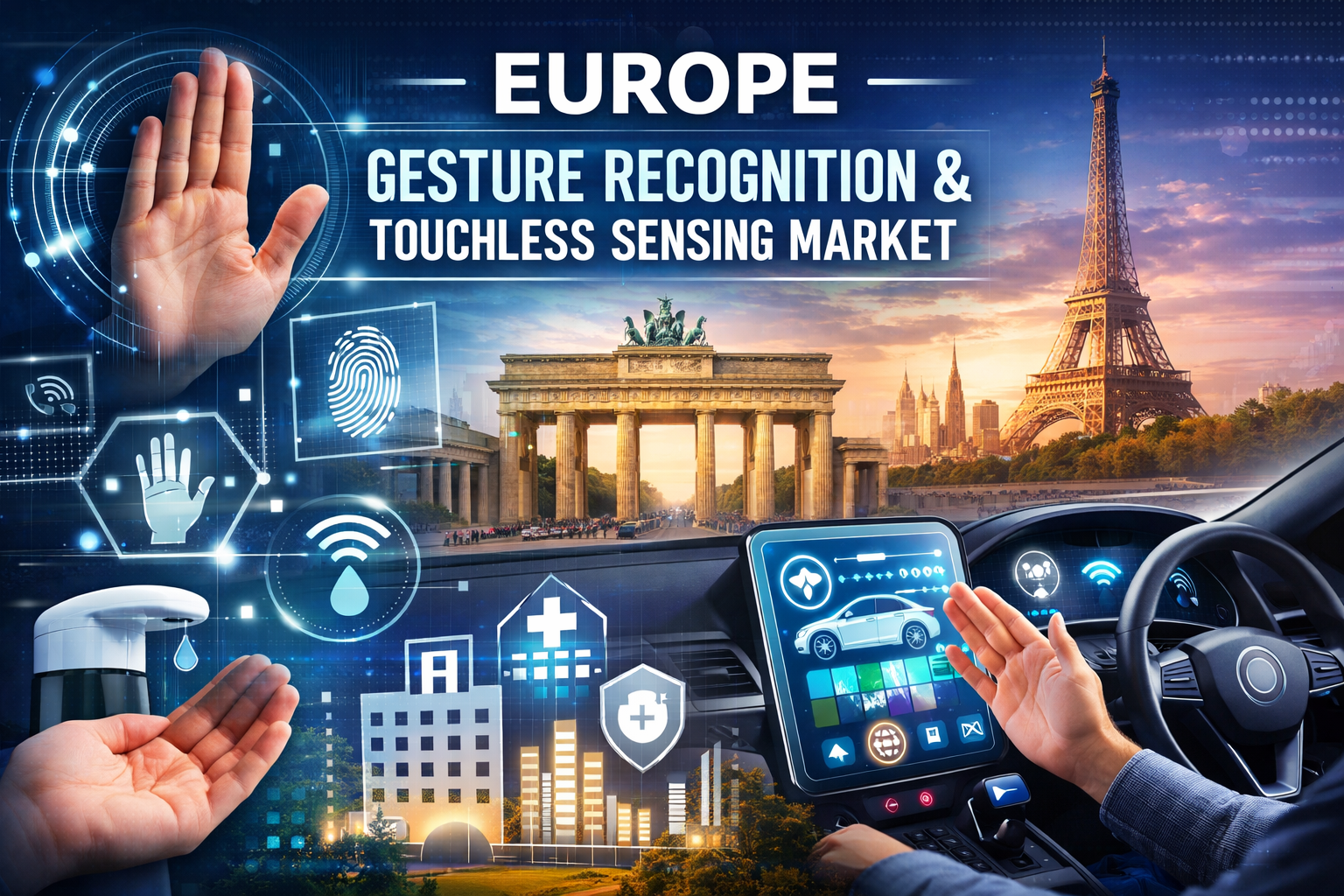
In addition, gesture recognition technologies are gaining traction in consumer electronics and industrial applications. These systems enable users to control devices through hand movements or body gestures, eliminating the need for physical buttons or touchscreens. As sensor technologies and AI-driven computer vision continue to advance, gesture recognition systems are becoming more accurate, responsive, and reliable.
Automotive Industry Accelerating Adoption of Gesture Recognition
One of the strongest growth drivers for the European gesture recognition and touchless sensing market is the automotive sector. Europe is home to several leading premium vehicle manufacturers that are continuously integrating advanced human–machine interface (HMI) technologies into their vehicles.
Gesture-controlled infotainment systems, driver monitoring solutions, and touchless in-cabin controls are becoming common features in modern vehicles. These technologies allow drivers to adjust settings such as climate control, navigation, and multimedia functions using simple hand gestures, reducing distractions and improving road safety.
Automotive manufacturers are increasingly leveraging AI-powered vision systems, depth sensors, and radar technologies to enable gesture recognition within vehicle interiors. These innovations not only improve driver convenience but also support advanced safety features such as occupant monitoring and driver attention detection.
As the automotive industry moves toward autonomous driving and software-defined vehicles, the demand for intuitive and contactless control interfaces is expected to grow significantly across Europe.
Online Gesture Recognition Emerging as a High-Growth Segment
Within the gesture recognition ecosystem, online gesture recognition technology is expected to experience the fastest growth during the forecast period. Online gesture recognition systems analyze and interpret gestures in real time, enabling immediate system responses.
This capability is particularly valuable in applications where rapid interaction is essential, such as automotive controls, industrial automation, and interactive public displays. Real-time gesture recognition enhances usability and allows systems to respond instantly to user commands.
Advancements in edge computing and embedded artificial intelligence are further enabling real-time gesture processing directly on devices. By reducing latency and minimizing reliance on cloud infrastructure, edge-based gesture recognition systems deliver faster and more reliable performance.
As connected devices and intelligent machines become more prevalent across Europe, online gesture recognition technologies are expected to play a critical role in enabling natural and intuitive user interactions.
Touchless Technology Segment to Experience Rapid Growth
The touchless technology segment is projected to register the highest growth rate in the European market. Increasing demand for contact-free interaction across public spaces, healthcare facilities, and workplaces is driving the adoption of touchless sensing solutions.
Airports, railway stations, shopping malls, and government facilities across Europe are increasingly implementing touchless access systems and automated infrastructure. These solutions help minimize physical contact with surfaces while improving operational efficiency and user convenience.
In addition, smart building initiatives are accelerating the adoption of gesture-based controls for lighting, temperature management, and security systems. By integrating touchless technologies into building management systems, organizations can enhance energy efficiency while providing seamless control for occupants.As smart city projects continue to expand across Europe, the deployment of touchless interaction technologies is expected to increase significantly.
Rising Adoption of Touchless Sanitary Equipment
Touchless sanitary equipment is emerging as one of the fastest-growing segments in the touchless sensing market. Growing awareness of hygiene and infection prevention has accelerated the deployment of automated sanitation systems across commercial and public facilities.
Hospitals and healthcare centers across Europe are increasingly using touchless hand dryers, automated flushing systems, and sensor-based faucets to reduce the spread of infections. Similarly, airports, railway stations, and shopping centers are installing touchless sanitation systems to improve cleanliness and enhance user safety.
Government regulations and public health guidelines are also supporting the adoption of touchless sanitary technologies. By encouraging the implementation of automated hygiene solutions, regulatory authorities are helping create a safer environment in public spaces.
The integration of advanced sensors and AI-based detection technologies is further improving the performance and reliability of touchless sanitary systems, enabling them to operate efficiently in high-traffic environments.
Germany Leading Innovation in Gesture Recognition Technologies
Germany is expected to play a central role in the development and deployment of gesture recognition and touchless sensing technologies across Europe. The country’s strong automotive industry, advanced manufacturing capabilities, and robust research ecosystem make it a key hub for innovation in human–machine interface technologies.
German companies and research institutions are actively developing advanced sensor technologies, embedded AI solutions, and computer vision algorithms that enable accurate gesture recognition. These innovations are helping accelerate the adoption of touchless interaction systems across various industries.
In addition to automotive applications, gesture recognition technologies are also being deployed in industrial automation, robotics, and smart factory environments. By enabling workers to interact with machines through gestures, these technologies improve operational efficiency and reduce the need for physical controls.
Smart Cities and Digital Infrastructure Creating New Opportunities
Europe’s growing investments in smart cities and digital infrastructure are creating significant opportunities for the gesture recognition and touchless sensing market. Governments across the region are prioritizing the development of intelligent transportation systems, smart buildings, and digital public services.
Gesture recognition technologies are being integrated into public transport systems, traffic management platforms, and urban infrastructure to enhance efficiency and improve user experience. For example, gesture-based controls can be used in interactive kiosks, digital signage, and ticketing systems, allowing users to interact with public services without physical contact.
Similarly, smart buildings are increasingly incorporating touchless access control systems and gesture-controlled automation platforms. These systems improve building security while providing convenient and intuitive interfaces for occupants.
As cities across Europe continue to embrace digital transformation, the demand for gesture recognition and touchless sensing technologies is expected to rise significantly.
Challenges: Privacy Regulations and High Deployment Costs
Despite the strong growth prospects, the gesture recognition and touchless sensing market faces several challenges. One of the primary concerns is compliance with stringent data privacy regulations across Europe.
Regulations such as the General Data Protection Regulation (GDPR) impose strict requirements on the collection, processing, and storage of biometric and behavioral data. Companies deploying gesture recognition and touchless sensing systems must ensure that their solutions comply with these regulations, which can increase development complexity and operational costs.
Another challenge is the high cost associated with advanced gesture recognition technologies. Developing accurate gesture recognition systems often requires sophisticated sensors, advanced algorithms, and high-performance processing capabilities. These factors can increase the overall cost of deployment, particularly in large-scale applications.
However, continuous advancements in sensor technology, AI algorithms, and edge computing are expected to reduce costs over time, making gesture recognition systems more accessible across industries.
Key Industry Players Driving Market Growth
Several technology companies are playing a crucial role in advancing gesture recognition and touchless sensing solutions across Europe. Key market players include:
Key Players
Leading players in the Europe gesture recognition and touchless sensing market include Sony Depthsensing Solutions (Belgium), Infineon Technologies (Germany), Cognitec Systems GmbH (Germany), IrisGuard (UK), Valeo (France), AMERIA AG (Germany), IDEMIA (France), Microchip Technology Inc. (US), OMNIVISION (US), and Cisco Systems, Inc. (US).
These companies are investing heavily in research and development to enhance sensor accuracy, improve AI-based gesture recognition algorithms, and develop innovative touchless interaction solutions. Their technologies are enabling applications ranging from automotive control systems and biometric authentication to industrial automation and smart home devices.
Related Reports :
Gesture Recognition and Touchless Sensing Market Size, Share & Growth
https://www.marketsandmarkets.com/Market-Reports/touchless-sensing-gesturing-market-369.html
North America Gesture Recognition and Touchless Sensing Market
https://www.marketsandmarkets.com/Market-Reports/north-america-gesture-recognition-touchless-sensing-market-13491584.html
Asia Pacific Gesture Recognition and Touchless Sensing Market
Share on Social Media


Contact Information
SAMIR SHUKLA
MarketsandMarkets™ Research Private Ltd.
Magarpatta Sez, Tower B5-1
Hadapsar
Pune
Maharashtra
411013
9923490533
https://www.marketsandmarkets.com/
Other Industry News
Ready to start publishing
Sign Up today!