Aerospace Industry Today
Europe Remotely Operated Vehicle (ROV) Market : Growth Opportunities, Key Trends, Industry Report 2030
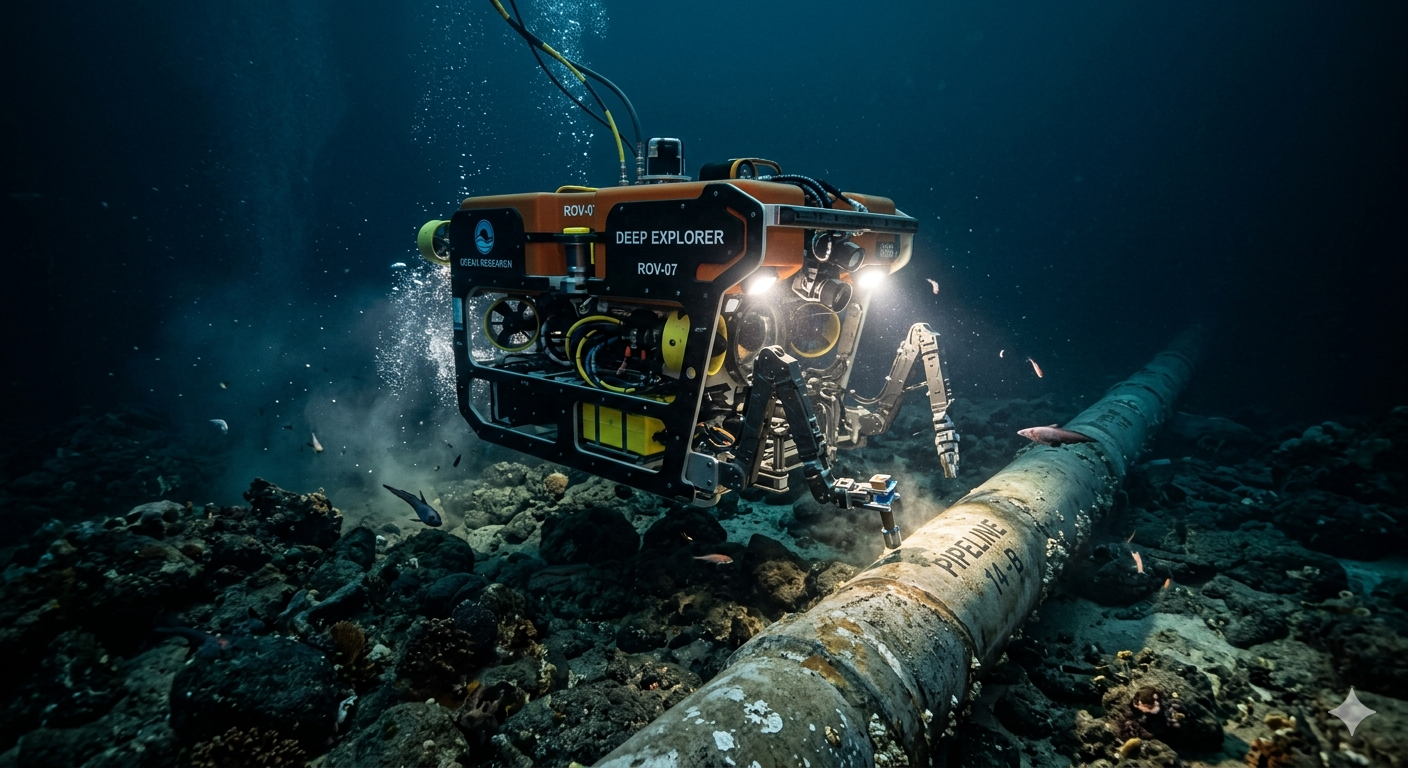
The Europe Remotely Operated Vehicle (ROV) Market is on a steady growth trajectory as nations across the continent intensify investments in offshore energy, subsea infrastructure, defense modernization, environmental monitoring, and maritime research. ROVs — unmanned underwater robotic systems controlled remotely from surface vessels or land stations — are essential tools for deepwater inspection, construction support, sub‑sea cable surveying, and mission‑critical subsea operations that would otherwise be dangerous or costly for human divers.
The European ROV market is projected to grow from USD 0.85 billion in 2025 and to reach USD 1.21 billion by 2030, at a Compound Annual Growth Rate (CAGR) of 7.3% during the forecast period. This growth reflects expanding offshore wind projects, subsea energy infrastructure development, and heightened maritime security requirements across the region.
Download PDF Brochure: https://www.marketsandmarkets.com/pdfdownloadNew.asp?id=187129955
Key Market Drivers
Expansion of Offshore Wind and Renewable Energy Projects
One of the strongest drivers of Europe ROV Market growth is the rapid deployment of fixed and floating offshore wind farms — particularly in the North Sea, Baltic Sea, and Irish Sea. These installations require frequent subsea inspection, foundation monitoring, cable laying support, and maintenance throughout construction and operational life cycles. ROVs provide reliable remote access to inspect foundations, monitor scour conditions, and support subsea infrastructure, reducing reliance on divers and improving safety and efficiency.
Regulatory Pressure for Marine Environmental Monitoring
European countries have implemented strict environmental regulations designed to protect marine ecosystems. This has accelerated demand for ROVs in environmental protection, oceanography, and monitoring applications, where these systems collect high‑resolution imagery, sample data, and real‑time metrics from seabed environments. Increased regulatory focus on marine conservation and pollution prevention is driving ROV adoption for scientific research and compliance monitoring across coastal and offshore waters.
Growth of Subsea Interconnector and HVDC Projects
The transition to a more interconnected European energy grid has spurred investment in high‑voltage subsea interconnectors and HVDC power cables, particularly linking the UK, Nordic countries, and mainland Europe. These long‑distance subsea power links require meticulous inspection, burial depth verification, and integrity monitoring — work ideally suited to ROVs equipped with advanced sensing and navigation systems. This trend supports Europe ROV Market growth by providing long‑term, high‑value opportunities for subsea inspection and maintenance services.
Rising Defense and Security Applications
Defense and maritime security agencies across Europe are increasing their use of ROVs for underwater surveillance, mine countermeasures, hull inspections, route surveys, and hostile threat mitigation. As geopolitical activity rises in key maritime regions such as the Mediterranean and Baltic Seas, demand for ROVs in defense applications strengthens, contributing meaningfully to market expansion.
Market Segmentation
By Size
The Europe ROV market comprises multiple vehicle size classifications, including:
- Observation Class ROVs – Primarily for general inspection, surveys, and light intervention tasks.
- Medium/Small ROVs – Used for moderate subsea work, including cable and pipeline monitoring.
- Work‑Class ROVs – Heavy‑duty systems deployed for deepwater construction support, oil and gas field life extension, and complex subsea intervention tasks.
Among these, work‑class ROVs are poised to dominate due to their robust capabilities, advanced tooling interfaces, and reliability in harsh subsea conditions — particularly for offshore wind and energy infrastructure projects.
By Propulsion
ROVs are also segmented by propulsion type:
- Electric ROVs – Leading propulsion option in Europe because they enable quieter operations, lower emissions, and cost‑efficient subsea missions.
- Mechanical ROVs – Traditional power systems still used for specific heavy‑duty tasks.
- Hybrid ROVs – Combining features of both electric and mechanical systems for flexible performance across applications.
Electric ROVs are increasingly preferred in offshore wind and environmental monitoring due to their quieter operation and reduced maintenance requirements.
By Application
Applications of ROVs in Europe are diverse and expanding:
- Military & Defense – Underwater threat detection, mine neutralization, hull inspection.
- Oil & Gas – Subsea pipeline inspection, platform maintenance, deepwater operations.
- Environmental Protection & Monitoring – Data collection, pollution tracking, habitat assessments.
- Oceanography & Marine Research – Scientific surveys, seabed mapping, climate studies.
- Archaeology & Exploration – Exploration of historic shipwrecks and submerged sites.
- Search & Salvage Operations – Recovery and inspection after maritime incidents.
Among these, the military & defense segment is expected to remain dominant during the forecast period, driven by rising defense modernization programs and increased maritime security priorities across European navies.
Regional Insights
United Kingdom
The UK is projected to account for a significant share of Europe’s ROV revenue, with around 24.6% share in 2025. This is supported by the UK’s advanced offshore wind sector, subsea energy activities, and robust maritime defense demand.
Germany
Germany is expected to emerge as the fastest‑growing country‑level market for ROVs, driven by significant offshore wind expansion in the North Sea and the Baltic region, as well as increased subsea cable inspection and advanced marine robotics research initiatives.
Other notable markets include Norway, France, Italy, Spain, the Netherlands, Sweden, Denmark, and Belgium — each contributing to regional growth through offshore energy, marine research, and subsea infrastructure projects.
Competitive Landscape
The Europe ROV Market is shaped by both global and regional players who provide advanced underwater robotics technologies, integrated inspection systems, and mission‑ready platforms. Prominent companies include:
- TechnipFMC (UK)
- BAE Systems (UK)
- Saipem S.p.A. (Italy)
- DeepOcean (Norway)
- Exail Technologies (France)
- ATLAS Elektronik GmbH (Germany)
- Kystdesign AS (Norway)
- SeaDrone Inc. (Spain)
- Blueye Robotics AS (Norway)
- Ocean Modules Sweden AB (Sweden)
These firms combine advanced sensing systems, manipulators, and navigation tools to deliver reliable and efficient ROV platforms for subsea operations across energy, defense, research, and environmental monitoring sectors.
Inquiry Before Buying @ https://www.marketsandmarkets.com/Enquiry_Before_BuyingNew.asp?id=187129955
Market Trends and Opportunities
Hybrid ROV‑USV Missions
End users are increasingly adopting ROV and USV (Unmanned Surface Vehicle) hybrid missions that allow simultaneous surface and subsea operations controlled from remote centers. This trend improves operational safety, reduces vessel costs, and enhances mission efficiency.
Automated Inspection Workflows
Automation and real‑time data analytics are enabling next‑generation inspection workflows, where ROVs work in conjunction with AI‑enabled processing systems for rapid anomaly detection, predictive maintenance, and decision support.
Future Europe ROV market Outlook
The outlook for the Europe ROV market remains promising, underpinned by continued investments in offshore energy, subsea infrastructure, maritime defense, and marine research. As nations move toward climate‑neutral energy portfolios and interconnected underwater grids, ROVs will be critical to ensuring the safety, efficiency, and integrity of subsea assets and operations.
Top 10 Key Takeaways
- The Europe ROV market is projected to grow from approximately USD 0.85 billion in 2025 to about USD 1.21 billion by 2030 at a CAGR of 7.3%.
- Offshore wind farm expansion across the North Sea and Baltic regions is a major growth driver.
- UK and Germany are key markets, with significant shares and rapid growth prospects.
- Work‑class ROVs dominate due to their robust capabilities in harsh subsea environments.
- Electric propulsion ROVs are increasingly adopted for lower‑carbon subsea missions.
- Military and defense applications remain strong contributors to demand.
- Hybrid ROV‑USV missions and automation are emerging operational trends.
- Regulatory pressure on environmental monitoring is supporting ROV utilization.
- Challenges include limited vessel availability and harsh weather conditions.
- The market’s competitive landscape features both established OEMs and innovative European players.
Frequently Asked Questions (FAQs)
1. What is a Remotely Operated Vehicle (ROV)?
An ROV is an unmanned underwater robotic system remotely piloted from a surface vessel or land station, used for subsea inspection, maintenance, and exploration.
2. What is driving the growth of the Europe ROV market?
Key drivers include offshore wind expansion, subsea interconnector projects, environmental monitoring, and defense applications.
3. Which ROV size category is most popular in Europe?
Work‑class ROVs lead due to their advanced capabilities for deepwater operations and heavy subsea tasks.
4. What are the major challenges for the Europe ROV market?
Challenges include limited offshore vessel availability, high operational costs, harsh offshore conditions, and skill shortages.
5. Who are the leading ROV companies in Europe?
Prominent players include TechnipFMC, BAE Systems, Saipem, DeepOcean, Exail Technologies, and ATLAS Elektronik
Share on Social Media


Contact Information
SAMIR SHUKLA
MarketsandMarkets™ Research Private Ltd.
Magarpatta Sez, Tower B5-1
Hadapsar
Pune
Maharashtra
411013
9923490533
https://www.marketsandmarkets.com/
Other Industry News
Ready to start publishing
Sign Up today!