

Aerospace Industry Today
Earth Observation Small Satellite Market : Growth Opportunities, Key Trends, Industry Report 2030
The Earth Observation (EO) Small Satellite Market has emerged as one of the fastest-growing sectors within the global space industry. Earth observation satellites capture images and collect data about the planet’s surface, atmosphere, and oceans, enabling governments, businesses, and research institutions to analyze environmental changes, monitor natural resources, manage disasters, and enhance national security. In recent years, advancements in satellite miniaturization, lower launch costs, and improved imaging technologies have accelerated the adoption of small satellites for Earth observation missions.
Small satellites—typically categorized as nano, micro, or mini satellites—offer cost-effective and flexible alternatives to traditional large satellites. They allow organizations to deploy satellite constellations capable of providing frequent and high-resolution imagery for a wide range of applications such as agriculture monitoring, climate research, urban planning, maritime tracking, and defense intelligence.
The Earth observation (EO) small satellite market is projected to grow from USD 2.64 billion in 2025 to USD 5.52 billion by 2030 at a CAGR of 15.9%. The increasing need for high-frequency Earth observation data drives the EO small satellite market. This data supports planning across defense, environmental management, and commercial analytics.
Download PDF Brochure: https://www.marketsandmarkets.com/pdfdownloadNew.asp?id=143752912
Market Overview
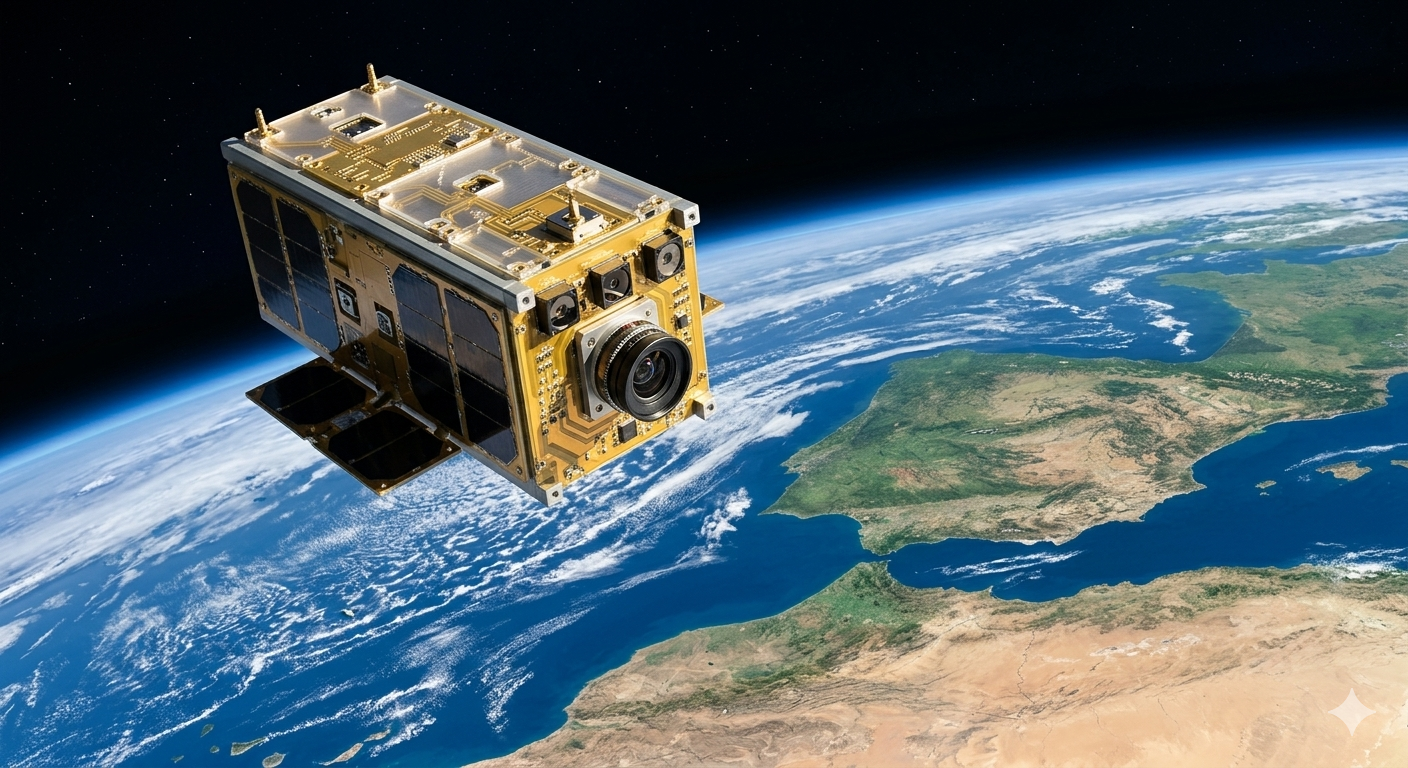
Earth observation small satellites are specialized spacecraft designed to monitor and collect data about Earth using advanced sensors and imaging technologies. These satellites are typically deployed in Low Earth Orbit (LEO), allowing them to capture detailed images and revisit specific locations frequently.
Unlike traditional satellites that are expensive and time-consuming to build and launch, small satellites can be developed quickly and deployed in constellations to cover larger areas of the planet. This capability enables continuous monitoring of environmental and human activities, providing valuable data for decision-making across industries.
The growing demand for real-time geospatial intelligence, climate monitoring, disaster response, and defense surveillance is significantly contributing to the market's expansion. Governments and commercial organizations increasingly rely on satellite imagery to analyze trends, track environmental changes, and support strategic planning.
As technology continues to advance, the Earth observation small satellite market is expected to become a key component of the global space economy.
Market Size and Forecast
The global market for Earth observation small satellites is witnessing substantial growth due to increasing investments in space technologies and the rising demand for satellite imagery.
Key market statistics include:
- Market size in 2024: USD 1.98 billion
- Market size in 2025: USD 2.64 billion
- Projected market size in 2030: USD 5.52 billion
- CAGR (2025–2030): 15.9%
The strong growth outlook is driven by the rapid expansion of satellite constellations, advancements in imaging technology, and increasing government initiatives supporting space exploration and Earth observation programs.
Moreover, private space companies are playing an increasingly important role in expanding satellite infrastructure and providing commercial Earth observation services to industries such as agriculture, insurance, logistics, and environmental monitoring.
Key Market Drivers
Increasing Demand for Geospatial Data
One of the primary drivers of the Earth observation small satellite market is the growing need for high-resolution geospatial data. Governments and businesses rely on satellite imagery to monitor natural resources, track weather patterns, and analyze urban development.
Satellite-based data is particularly useful for climate monitoring, environmental protection, and disaster management, enabling organizations to detect changes in land use, deforestation, and ocean conditions.
Growth of Satellite Constellations
Another important factor driving market growth is the deployment of satellite constellations. Instead of relying on a single satellite, companies now launch groups of small satellites that work together to provide continuous global coverage.
Satellite constellations enable faster revisit times, meaning satellites can capture images of the same location multiple times per day. This capability is essential for applications such as agriculture monitoring, maritime tracking, and emergency response.
Declining Launch Costs
Advancements in launch technology have significantly reduced the cost of sending satellites into space. The emergence of reusable launch vehicles and dedicated small satellite launch providers has made satellite deployment more affordable for both government agencies and private companies.
Lower launch costs have enabled startups and research organizations to participate in space missions, further accelerating innovation in the Earth observation market.
Expansion of Commercial Space Industry
The commercialization of space has opened new opportunities for Earth observation services. Private companies now offer satellite imagery, geospatial analytics, and data-driven insights to various industries.
This shift toward commercial space operations is transforming the Earth observation ecosystem, enabling businesses to access satellite data for applications such as precision agriculture, logistics optimization, and infrastructure monitoring.
Market Segmentation
The Earth Observation Small Satellite Market is segmented based on mass, system, customer, frequency, technology, and region.
By Mass
Small satellites are classified according to their weight:
- Mini Satellites (101–1,200 kg)
- Micro Satellites (11–100 kg)
- Nano Satellites (1–10 kg)
Among these categories, mini satellites are expected to register the highest growth rate, as they provide advanced imaging capabilities while remaining relatively cost-effective compared to traditional large satellites.
By System
The key system components used in Earth observation satellites include:
- Satellite bus
- Solar panels
- Payloads
- Satellite antennas
- Other subsystems
The satellite bus segment is projected to dominate the market, as it forms the structural framework that integrates various satellite components such as power systems, propulsion systems, and communication modules.
By Customer
Earth observation satellites serve multiple types of customers:
- Commercial organizations
- Government and civil agencies
- Defense sector
The defense segment is expected to grow at the fastest rate, driven by increasing investments in space-based intelligence and surveillance technologies.
By Frequency
Different frequency bands are used for transmitting satellite data:
- L-band
- S-band
- C-band
- X-band
- Ku-band
- Ka-band
- Q/V/E-band
Among these, the X-band segment is expected to hold the largest market share due to its ability to transmit large amounts of Earth observation data quickly and reliably.
By Technology
Earth observation satellites rely on several advanced sensing technologies, including:
- Optical imaging
- Synthetic aperture radar (SAR)
- Radio frequency observation
- Atmospheric monitoring technologies
The optical imaging segment is expected to dominate the market, as high-resolution optical images are widely used for urban planning, environmental monitoring, and defense surveillance.
Regional Analysis
The Earth observation small satellite market spans several regions, including North America, Europe, Asia Pacific, the Middle East, and Latin America.
Asia Pacific currently holds a significant share of the market, accounting for approximately 57% of the global market in 2025, driven by increasing investments in space technology and satellite infrastructure.
North America is expected to experience strong growth due to government investments in space-based intelligence systems and the presence of major satellite manufacturers and commercial space companies.
Europe is also an important contributor to the market, with several established aerospace companies and government-backed space initiatives supporting Earth observation missions.
Competitive Landscape
The Earth observation small satellite market includes several major aerospace companies and emerging technology firms.
Key Companies
Leading players in the market include:
· Airbus (France),
· Thales Alenia Space (France),
· L3harris Technologies, Inc. (US),
· Planet Labs PBC (US), and
· MDA Space (Canada)
These companies focus on technological innovation, partnerships, and satellite constellation deployments to strengthen their market positions.
Future Outlook
The future of the Earth observation small satellite market looks promising as demand for satellite-based data continues to grow across industries. Emerging technologies such as hyperspectral imaging, artificial intelligence, and advanced data analytics are expected to enhance the capabilities of Earth observation systems.
Additionally, the increasing number of satellite constellations and international collaborations in space exploration will further accelerate the adoption of small satellites. As governments and private organizations invest more heavily in space infrastructure, Earth observation technologies will play a critical role in addressing global challenges such as climate change, disaster management, and sustainable development.
Inquiry Before Buying : https://www.marketsandmarkets.com/Enquiry_Before_BuyingNew.asp?id=143752912
Top Key Takeaways
- The Earth observation small satellite market is projected to reach USD 5.52 billion by 2030.
- The market will grow at a CAGR of 15.9% between 2025 and 2030.
- Market size is expected to increase from USD 2.64 billion in 2025.
- Mini satellites are projected to grow at the fastest rate.
- The satellite bus segment dominates the system category.
- Defense applications are expected to grow rapidly due to space-based intelligence needs.
- X-band frequency is widely used for transmitting large volumes of observation data.
- Optical imaging technology leads the market for Earth observation applications.
- Asia Pacific accounts for the largest market share in 2025.
- Key companies include Airbus, Planet Labs, Thales Alenia Space, and Maxar Technologies.
Frequently Asked Questions (FAQs)
1. What are Earth observation small satellites?
Earth observation small satellites are compact spacecraft designed to collect images and data about the Earth’s surface, atmosphere, and oceans for applications such as environmental monitoring, agriculture analysis, and defense intelligence.
2. How big is the Earth observation small satellite market?
The market is expected to grow from USD 2.64 billion in 2025 to USD 5.52 billion by 2030.
3. What factors are driving the growth of the market?
Key drivers include increasing demand for geospatial data, declining satellite launch costs, expansion of satellite constellations, and growing investments in space technologies.
4. Which technology dominates the Earth observation satellite market?
Optical imaging technology currently dominates the market due to its ability to capture high-resolution images for environmental monitoring, defense surveillance, and urban planning.
5. Who are the major players in the Earth observation small satellite market?
Leading companies include Airbus, Thales Alenia Space, Planet Labs, L3Harris Technologies, and Maxar Technologies
Share on Social Media


Contact Information
SAMIR SHUKLA
MarketsandMarkets™ Research Private Ltd.
Magarpatta Sez, Tower B5-1
Hadapsar
Pune
Maharashtra
411013
9923490533
https://www.marketsandmarkets.com/
Other Industry News
Ready to start publishing
Sign Up today!



